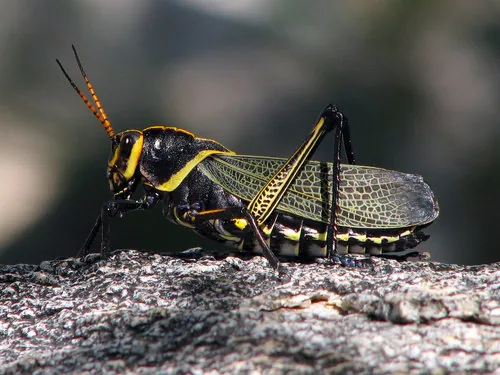
Field Identification
If new growth is curling, yellowing, sticky, or chewed, lubber grasshopper may already be on the plant. This pest often builds quietly, then damage appears all at once. Feeding stress weakens growth, reduces yield, and opens the door to secondary disease. Early cleanup is much easier than fighting a full population surge later.
Inspect the newest growth first: leaf undersides, flower buds, stem joints, and tender tips where pests gather. Look for body shape, color, eggs, cast skins, honeydew, webbing, or fresh puncture marks. A hand lens and a white paper tap test help reveal small life stages. Matching visible pests with fresh plant damage confirms active infestation.
Not sure what you have? Use the symptom diagnosis tool →
How to Deal With It
Organic Control Methods
Lubber grasshoppers are chemically defended — they sequester toxins from plants they eat and most predators avoid them. Birds that eat them (loggerhead shrikes, some raptors) have adapted to the toxins. Tachinid flies parasitize lubbers and are the most effective natural control — support them with flowering herbs like dill and fennel. No commercial biological control is available for lubbers. Long-term population management depends on disrupting egg-laying habitat more than predators.
Lubbers overwinter as eggs in dry, sunny, sandy soil — the same open areas where adults congregate in fall. Nymphs hatch in spring as tight black-and-yellow bands clustered in one spot before dispersing. Finding and destroying these nymph clusters in spring is the single most effective control — a dozen small nymphs is far easier to manage than a dozen 3-inch adults. Scout weedy margins, roadsides, and dry open ground in March-April in Florida and the Gulf Coast states.
Young nymphs are vulnerable and localized — concentrate effort in spring when they are still clustered. Adults are large, slow, and hard to kill with sprays due to their chemical defense and thick cuticle. Dense planting and ground cover makes gardens less attractive as egg-laying habitat. Lubbers prefer open sunny areas — a food forest with dense canopy and understory is genuinely less attractive than a lawn or open bed.
Hand-picking or stomping with gloved hands is the most reliable control for adults — drop into soapy water. A smooth metal or fine mesh fence extending 12 inches above ground stops them from entering beds since lubbers are poor jumpers despite their size. For nymph clusters, a propane torch on egg masses in soil is effective where safe. Vacuuming dense aggregations works on small garden scale.
Sprays are largely ineffective on adults due to chemical defenses and thick cuticle. Target young nymphs only — spinosad applied to small black nymphs before they reach 1 inch works reasonably well. Neem has minimal effect on lubbers at any stage. Accept that adults require physical removal and focus spray effort entirely on spring nymph management when it can actually work.
Let Nature Handle It
Natural Enemies
- Tachinid Flies
- Birds
- Mammals
Threat Map