About
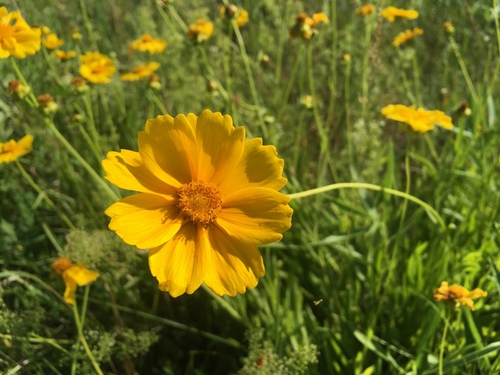
Tickseed coreopsis (Coreopsis lanceolata) is a sunny perennial wildflower of prairies, roadsides, and open woods in eastern and central North America, forming low evergreen rosettes with leafless flowering stems carrying large golden-yellow daisies. It is a durable matrix plant for meadow strips, pollinator borders, and lean rain-garden berms where irrigation is lazy. ☀️💧 Sun and Water Requirements: Full sun for maximum bloom; light shade reduces flowers and encourages lax stems. Well-drained average to poor soils are ideal; tolerates drought once established. Avoid heavy wet clay unless amended with gravel and slope; winter wet can rot crowns in marginal zones. ✂️ Propagation: Sow seed in fall outdoors or early spring; lightly cover. Divide rosettes in early spring or after bloom; pieces with roots establish quickly. Deadhead to prolong bloom but leave late seedheads if you want finch traffic and self-sowing. 🌾 Harvest / Best Use Timing: Cut flowers at color for bouquets; stems are wiry and long-lasting. Collect dry seedheads when centers brown for local genotype projects. Shear tired plants midsummer for a neater rebloom flush where the growing season is long.
Permaculture Functions
- Pollinator: Flat yellow rays offer easy landing pads for small native bees and hoverflies during early-summer peaks.
- Ornamental: Bold gold flowers read clean at distance in meadow designs and gravel gardens.
- Ground Cover: Evergreen rosettes knit open ground between taller forbs when allowed to self-sow in moderation.
- Erosion Control: Fibrous roots stabilize shallow slopes on dry banks better than thirsty turf.
Practitioner Notes
- Deer sometimes sample it; rabbits may finish the thought—protect new rosettes if your neighborhood lacks predators.
- If it stops blooming, it is usually shade creep or fertility smothering—coreopsis likes life a little underfed.
- Shearing after first flush is the “reset button” for messy midsummer moods.
- Wet feet in winter is the silent crown killer; slope it or gravel it.
Companion Planting
- Little Bluestem — warm-season grass matrix; hides coreopsis ankles when stems elongate
- Purple Coneflower — overlapping bloom window; complementary flower forms for pollinators
- Yarrow — ferny foliage contrast; both handle lean soils and summer heat
- Self-seeding enthusiasm — thin volunteers if designs require geometric purity
- Root rot — improve drainage rather than adding sympathy waterings on clay
Pest Pressure