About
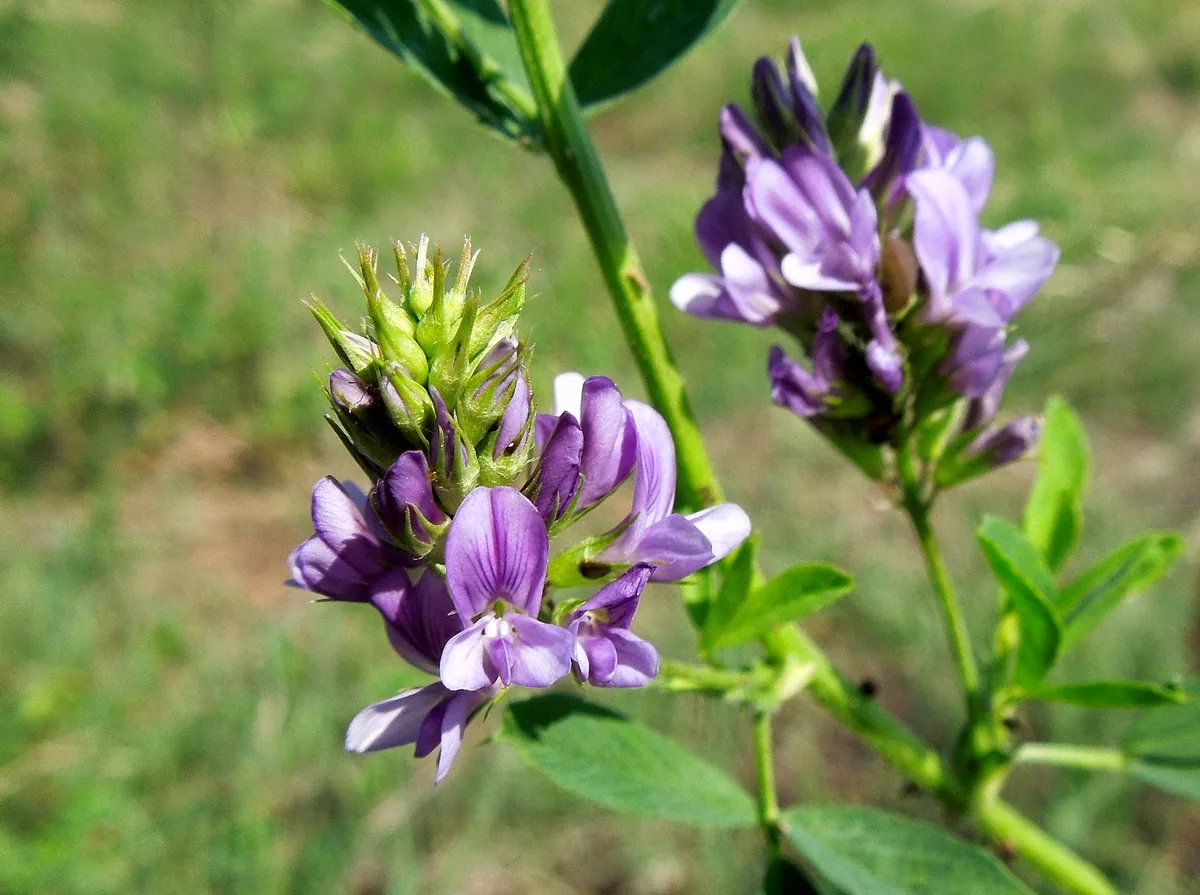
Alfalfa, also known as lucerne, is a perennial flowering plant in the legume family. It typically grows up to 1 meter (3.3 feet) in height and has a deep root system that can extend more than 15 meters (49 feet) to access groundwater. The plant has trifoliate leaves with obovate leaflets and clusters of small purple flowers. It is highly valued for its nutritional content and is widely cultivated as forage for livestock. Alfalfa thrives in well-drained soils with a neutral pH and requires full sun for optimal growth. It is drought-tolerant due to its extensive root system and can improve soil fertility through nitrogen fixation. Alfalfa is commonly propagated through seeds. The seeds should be inoculated with Rhizobium bacteria to ensure effective nitrogen fixation. Sowing is typically done in the spring or fall, depending on the climate, at a depth of about 1 centimeter (0.4 inches). A firm seedbed and adequate soil moisture are essential for successful germination. Alfalfa requires full sun exposure to thrive. It prefers well-drained soils and is tolerant of drought conditions once established, thanks to its deep root system. However, during establishment, consistent moisture is crucial to ensure proper root development. The optimal time to harvest alfalfa is at the early bloom stage, which balances yield and nutritional quality. Multiple cuttings can be made throughout the growing season, typically every 28 to 35 days, depending on growth conditions.
Permaculture Functions
- Edible: Medicago sativa sprouts from certified seed land on sandwiches with crunch -- field hay is forage, not salad; keep sprouting seed labeled food-grade to avoid crop-chemistry carryover.
- Nitrogen Fixer: Deep perennial taproot hosts Sinorhizobium meliloti nodules that keep fixing across multiple hay cuts -- rotate tomatoes or corn into the old stand the year after final kill to catch the biggest mineralized N flush.
- Animal Fodder: Early-bloom hay tests near twenty percent crude protein and fuels dairy without grain if you cut before lignin spikes -- autotoxicity means you cannot reliably reseed alfalfa into its own stubble without a break crop.
- Erosion Control: Sod-forming crowns knit terrace fills on highway cuts where annual covers wash out -- living crowns slow overland flow better than straw blankets once the stand closes in year two.
- Pollinator: Purple raceme flowers stack nectar for alkali bees and leafcutter bees through June heat -- leave border strips uncut if you want pollination services on adjacent melons while you still harvest central hay rounds.
Companion Planting
- Onion
- Garlic
Threats & Pressure
- Aphids
- Banded Cucumber Beetle
- Bean Aphid
- Bean Leaf Beetle
- Bean Weevil
- Clover Weevils
- Corn Earworm
- Cowpea Curculio
- Fall Armyworm
- Kudzu Bug
- Locust Borer
- Locust Leaf Miner
- Lubber Grasshopper
- Pea Moth
- Pea Weevil
- Reniform Nematode
- Root Aphid
- Soybean Looper
- Spittlebugs
- Stink Bug
- Striped Cucumber Beetle
- Spotted Cucumber Beetle
- Brown Marmorated Stink Bug
- Harlequin Ladybird
- Velvetbean Caterpillar