About
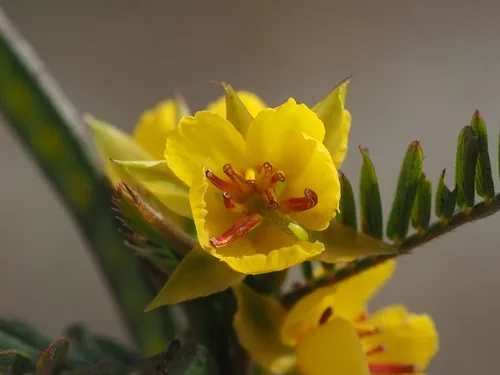
Partridge cassia here maps to Chamaecrista nictitans, a warm-season annual or short-lived legume of open sandy soils, roadsides, and disturbed ground across much of the Americas in tropical to warm-temperate climates. Leaves fold on touch like a modest mimosa; small yellow flowers give way to slender pods. It is a native disturbance responder that fixes nitrogen while early succession looks messy to lawn purists. Full sun; shade reduces bloom and nodulation. Drought tolerant once established in warm months; still benefits from rain after germination. Sandy or well-drained soils match its ecology; avoids stagnant wet clay. Direct-sow seed after soil warms; scarify if germination is slow. Thin seedlings to avoid overcrowding that favors powdery mildew. Do not transplant taprooted volunteers late—move tiny seedlings if needed. For cover, mow or crimp at early pod set if managing a succession bed; leave some plants to reseed. Seeds mature unevenly—collect brown pods before full shatter for intentional replanting. Leave patches blooming for specialist bees that recognize small cassioid flowers.
Permaculture Functions
- Nitrogen Fixer: Chamaecrista nictitans nodulates on warm-season annual roots, leaving nitrogen-rich residue when frost kills tops -- broadcast into disturbed sand after fire or grading so succession gets a legume pulse without perennial shade.
- Pollinator: Small yellow axillary flowers offer pollen and nectar to sweat bees and halictids on roadsides -- blooms close by midday heat, so pollinators learn the narrow morning window.
- Wildlife Attractor: Sensitive-compound leaves host sulphur butterfly larvae; dehiscent pods rattle seed for juncos and sparrows if stems stand into winter -- mow strips late if you need tidy sight lines but accept lost bird calories.
- Ground Cover: Prostrate branching hugs bare sand between bluestem plugs and wiregrass restoration plugs the first two seasons -- expect self-sowing yellow drifts wherever soil stays open and sun stays high.
Companion Planting
Threats & Pressure
- Aphids
- Banded Cucumber Beetle
- Bean Aphid
- Bean Leaf Beetle
- Bean Weevil
- Corn Earworm
- Cowpea Curculio
- Fall Armyworm
- Kudzu Bug
- Leafhoppers
- Locust Borer
- Locust Leaf Miner
- Lubber Grasshopper
- Pea Moth
- Pea Weevil
- Reniform Nematode
- Root Aphid
- Soybean Looper
- Spittlebugs
- Stink Bug
- Striped Cucumber Beetle
- Spotted Cucumber Beetle
- Brown Marmorated Stink Bug
- Harlequin Ladybird
- Velvetbean Caterpillar