About
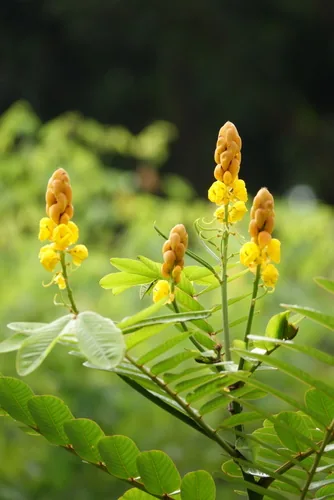
Cassia alata—now classified as Senna alata—is a fast-growing tropical shrub or soft-wooded perennial to about 2–4 m (6–13 feet), famous for vertical spikes of bright yellow flowers that resemble rows of candles. Large pinnate leaves close at night; plants seed readily in frost-free climates. Full sun for dense growth and heavy bloom. Fertile, well-drained soil; tolerates seasonal moisture in the wet season but not prolonged root drowning. In subtropical and tropical Americas it performs as a rank-growing wet-season ornamental—prune after bloom to control height and self-seeding. Regular water during establishment; somewhat drought-tolerant when older. Seeds: Scarify lightly and soak overnight; sow warm; germinates quickly. Cuttings: Take greenwood cuttings during the growing season under humidity. Collect dry pods before they shatter if you want controlled seed. Medicinal topical use appears in traditional literature—verify safety and local regulations before experimenting on skin.
Permaculture Functions
- Medicinal: winged leaves supply anthraquinone-rich washes used in traditional ringworm protocols -- where misidentification with other cassias would be dangerous without expert vetting.
- Biomass: wet-season softwood can be slash-mulched under fruit trees -- for fast-decaying cover because the shrub fixes little nitrogen compared with true legume trees in the same family.
- Ornamental: vertical yellow candle inflorescences read like living tiki torches along humid pond margins and fence lines -- where hard pruning controls height after bloom.
- Wildlife Attractor: nectar feeds bees and skippers while leaves host sulphur butterfly larvae in overlap zones -- so plan for chewed pinnules during caterpillar weeks.
Threats & Pressure
- Aphids
- Banded Cucumber Beetle
- Bean Aphid
- Bean Leaf Beetle
- Bean Weevil
- Corn Earworm
- Cowpea Curculio
- Fall Armyworm
- Kudzu Bug
- Locust Borer
- Locust Leaf Miner
- Lubber Grasshopper
- Pea Moth
- Pea Weevil
- Reniform Nematode
- Root Aphid
- Soybean Looper
- Spittlebugs
- Stink Bug
- Striped Cucumber Beetle
- Spotted Cucumber Beetle
- Brown Marmorated Stink Bug
- Harlequin Ladybird
- Velvetbean Caterpillar