About
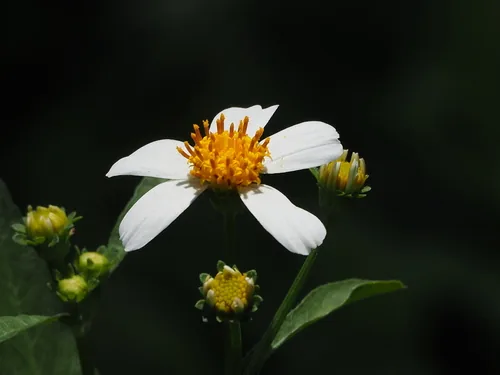
Hairy beggarsticks (Bidens alba) is a warm-climate annual to short-lived forb with opposite compound leaves, white ray flowers, and seeds armed with two barbed awns that hitchhike on socks and dog fur across the subtropical and tropical Americas. Young leaves are eaten as a pot herb in some Caribbean traditions—identification and clean sites matter more than bravado. Ecologically it is a blunt pioneer: it appears on disturbed, moist, fertile ground and feeds small pollinators when fancier flowers are still ordering business cards. Full sun to light shade; thrives with moderate moisture and moderate fertility—irrigated fields and garden edges are magnets. Tolerates brief drought but looks ragged; not a desert specialist. Frost-sensitive; dies back near 32°F (0°C) without cover. Avoid promoting it near natural areas where barbed seeds hitchhike into restoration plantings. Seeds germinate within days on disturbed soil; cultivation is accidental unless you intend it. Cut pre-seed if managing volunteers in managed beds. Gather young leaves before flowering for cooking greens from unsprayed ground. If excluding from beds, pull or mow before seeds mature—barbed awns are the plant's revenge tour.
Permaculture Functions
- Edible: Bidens alba young leaves cook as mild pot herbs in some Caribbean kitchens -- harvest only from clean, unsprayed ground and confirm opposite compound leaves before you steam a stranger.
- Pollinator: Small white ray flowers with yellow centers offer nectar and pollen to tiny bees and syrphid flies during hot months when many ornamentals are between flushes -- it is a blunt pioneer on disturbed, moist soil.
- Wildlife Attractor: Barbed two-awn achenes stick to fur and socks, but finches still work the seed heads late season -- manage before set if you dislike hitchhikers in wool or dog coats.
- Medicinal: Coastal folk use leaf teas and washes for minor complaints -- internal use needs positive ID and caution because Asteraceae chemistry varies; do not substitute roadside plants for pharmacy without training.
Companion Planting
Threats & Pressure