About
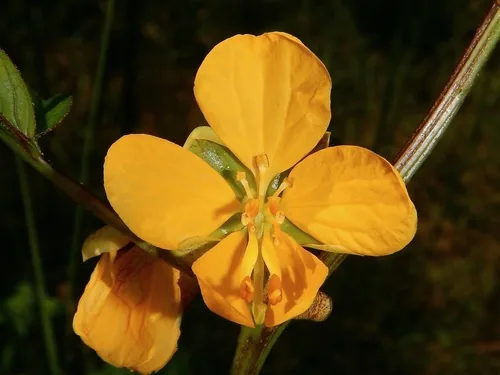
Coffee senna (*Senna occidentalis*) is a fast-growing warm-season legume herb to subshrub, often treated as an annual weed in cropland but occasionally used on purpose for biomass and insect interactions. Compound leaves look somewhat coffee-like; yellow flowers mature into narrow pods. Height commonly 0.5–2 m in a single season. All parts, especially seeds, are toxic to humans and many animals if ingested—treat it as a utility plant, not a salad bar. In Florida and Puerto Rico it appears in disturbed, sunny, moist-to-dry soils and completes life cycles quickly in heat. Full sun. Tolerates poor soils; moderate water speeds growth but it survives short dry spells once rooted. Avoid encouraging it near livestock paddocks or poultry yards because of seed toxicity. Seeds: Scarify or soak warm water, then direct-sow after soil temperatures stay above 21 °C (70 °F). Self-sowing: Allow pods to dry on-plant only in controlled areas where seedlings are welcome; otherwise remove pods before shatter. Chop before heavy seed set if using for green manure; compost hot piles break down stems. If managing as a nectar bank for beneficials, time mowing between bloom waves to prolong flowers without spreading seed recklessly.
Permaculture Functions
- Biomass: Senna occidentalis rockets to 0.5–2 m in one warm season, producing armloads of stems for hot compost or green manure -- if you cut before woody lignification.
- Nitrogen Fixer: Fabaceous roots nodulate and stash nitrogen in leaf and stem protein that returns to soil -- when the stand is mowed or turned under.
- Wildlife Attractor: Yellow pea flowers feed bees and sulphur butterflies whose caterpillars nibble foliage you already treat as utility -- not show beds.
- Pest Management: Early-season stands can bank generalist predators and serve as sacrificial hosts for legume pests -- if kept far from food-grade beans and peas.
Companion Planting
Threats & Pressure
- Aphids
- Banded Cucumber Beetle
- Bean Aphid
- Bean Leaf Beetle
- Bean Weevil
- Corn Earworm
- Cowpea Curculio
- Fall Armyworm
- Kudzu Bug
- Leafhoppers
- Locust Borer
- Locust Leaf Miner
- Lubber Grasshopper
- Pea Moth
- Pea Weevil
- Reniform Nematode
- Root Aphid
- Soybean Looper
- Spittlebugs
- Stink Bug
- Striped Cucumber Beetle
- Spotted Cucumber Beetle
- Brown Marmorated Stink Bug
- Harlequin Ladybird
- Velvetbean Caterpillar