About
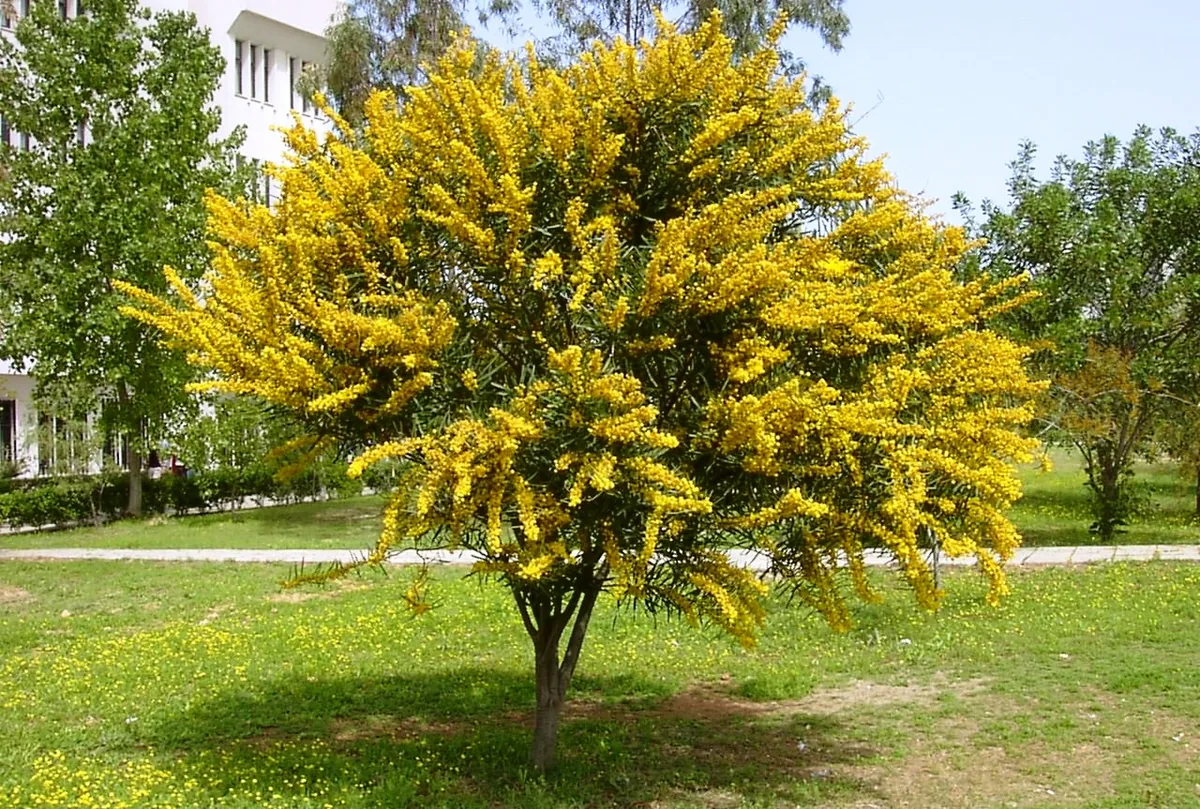
Acacia is a diverse genus of shrubs and trees known for their feathery foliage and fragrant, showy flowers, which range in color from creamy white to vibrant yellow. These plants typically reach heights between 5 to 12 meters (16 to 40 feet), depending on the species. Acacias are well-adapted to arid environments, featuring deep root systems that allow them to access groundwater, and many species possess thorns as a defense against herbivores. Acacias thrive in full sun and prefer well-drained soils. Once established, they are highly drought-tolerant and require minimal watering. Overwatering can lead to root rot, so it's essential to allow the soil to dry out between watering sessions. Propagation is commonly achieved through seeds or cuttings. Seeds often have a hard coat and benefit from scarification or soaking in hot water to enhance germination rates. Plant seeds approximately 2 centimeters (0.8 inches) deep in moist soil with temperatures above 15°C (59°F). Cuttings should be taken during the summer months and placed in well-draining soil. While acacias are not typically harvested for edible parts, their flowers and seed pods can be collected for various uses. Harvesting times vary by species and local climate conditions.
Permaculture Functions
- Nitrogen Fixer: Wattle roots nodulate with rhizobia on many species, so fine leaf litter and spent flowers recycle plant-available nitrogen along fence lines -- match seed source to proven inoculum on sterile subsoil fills or fixation stays patchy.
- Pollinator: Golden powderpuff or spike inflorescences open during dry warm windows when fewer native trees offer heavy nectar loads -- honeybees, small carpenter bees, and beetles work the shallow flowers on heat-stressed days.
- Wildlife Attractor: Thorny crowns, flaky bark, and legume pods feed insects, lizards, and seed-eating birds on savanna-style edges -- expect thorns on nursery tags to be honest when you prune inside the canopy.
- Erosion Control: Deep taproots and fast juvenile growth knit road cuts, mine spoil, and old-field erosion scars where topsoil was scraped -- pair with a maintained firebreak or mowing strip on the garden side so runners do not swallow paths.
- Windbreaker: Tall phyllode types slow desiccating wind across poultry yards and tunnel crops -- still lets winter light through after leaf drop on deciduous forms.
- Biofuel: Fast-cycled wattles coppice into chips and charcoal feedstocks on short rotations -- calorific value is modest next to oak, but annual dry-mass yields reward growers who accept splintery wood and ash-heavy fires.
Companion Planting
No companion data yet.
Also mentioned as companions:
- Eucalyptus
- Casuarina
- Grevillea
Not yet profiled in PermiePortal
- None known
Threats & Pressure
- Aphids
- Banded Cucumber Beetle
- Bean Aphid
- Bean Leaf Beetle
- Bean Weevil
- Corn Earworm
- Cowpea Curculio
- Fall Armyworm
- Kudzu Bug
- Locust Borer
- Locust Leaf Miner
- Lubber Grasshopper
- Pea Moth
- Pea Weevil
- Reniform Nematode
- Root Aphid
- Scale Insects
- Soybean Looper
- Spittlebugs
- Stink Bug
- Striped Cucumber Beetle
- Cottony cushion scale
- Spotted Cucumber Beetle
- Brown Marmorated Stink Bug
- Harlequin Ladybird
- Velvetbean Caterpillar