About
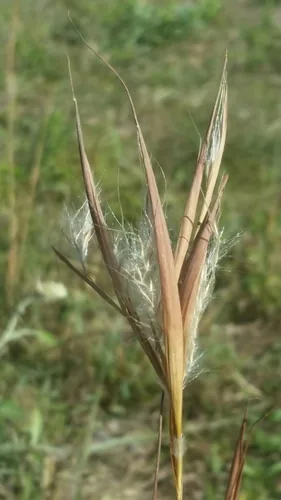
Elliott's bluestem (Andropogon gyrans) is a warm-season bunchgrass of dry woodlands, sandhills, and open pine savannas in the southeastern United States, named for stems that shed spikelets in a way that suggests mechanical drama. Clumps reach about 2–4 feet (0.6–1.2 m) with bluish summer foliage turning copper in autumn. It belongs in native meadow mixes, restoration blocks, and low-input ornamental plantings where little bluestem cousins need a regional teammate. Full sun for flowering and fall color; open canopy pine shade matches natural ecology. Well-drained, often sandy or gravelly soils; tolerates drought after establishment and sulks in wet clay that suffocates warm-season grass crowns. Avoid irrigation schedules designed for turf monocultures. Sow seed in warm soil after frost risk; establishment requires weed control the first season. Divide dormant crowns in early growth before heat; keep roots moist during transplant. Burn or mow according to local ecological guidance—some sites benefit from periodic renewal. For restoration, collect seed when spikelets mature and disperse naturally if timing aligns with project goals. For gardens, leave standing through winter for structure and insect habitat; cut back before new spring growth. Do not overgraze young stands if integrating livestock—roots need recovery time.
Permaculture Functions
- Wildlife Attractor: Andropogon gyrans spikelets shed on schedule to feed sparrows and bobwhite in longleaf sandhill understories -- where prescribed fire keeps stems young enough to digest between wiregrass tussocks.
- Erosion Control: Fibrous root mats lock two-to-four-foot clumps on droughty sand ridges -- where shallow-rooted winter annuals slough off after summer gully washers on zone 5-9 restoration plots.
- Biomass: Warm-season leaves build carbon for meadow hay piles or controlled-burn ash returns -- when land managers follow local ecological burn windows instead of random brush piles alone.
- Ornamental: Glaucous summer blades shift copper in autumn alongside little bluestem mixes so savanna-inspired beds gain a coastal-plain species -- without cloning the same cultivar on every berm.
Companion Planting
- Wet heavy clay — winter wet rots crowns; amend drainage or choose different species
- Shrub encroachment without fire or mowing — grasses lose light in abandoned savanna cosplay
Threats & Pressure