About
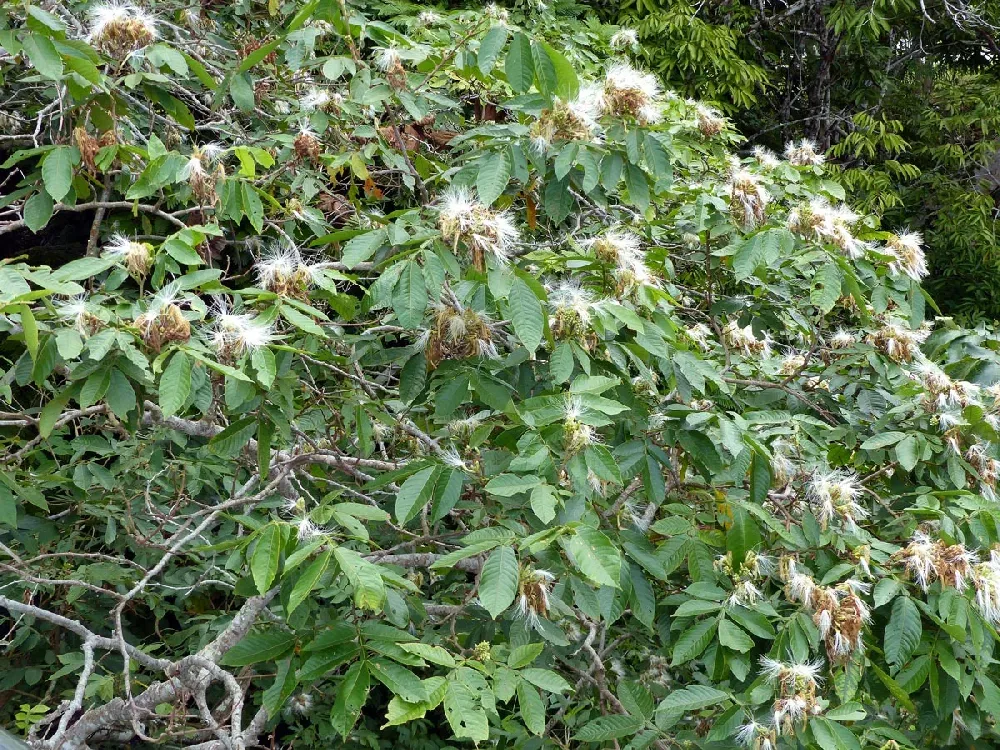
The Ice Cream Bean Tree (Inga edulis) is a fast-growing, tropical leguminous tree native to South America. It can reach heights up to 30 meters (98 feet) with a trunk diameter of about 60 centimeters (2 feet). The tree features a pale gray trunk and a broad, moderately dense canopy formed by branches that often start below 3 meters (9.8 feet). Its leaves are pinnate, dark green, and slightly pubescent, with 4–6 pairs of oval leaflets. The tree produces fragrant, white, pentamerous flowers arranged in dense axillary spikes. The fruit is a cylindrical, indehiscent pod that can grow up to 1 meter (3.3 feet) long, containing numerous seeds embedded in a sweet, cottony, white pulp reminiscent of vanilla ice cream. Propagation is typically achieved through seeds, which are recalcitrant and often begin germinating while still in the pod. It's advisable to plant seeds promptly, as they lose viability within two weeks of storage. Direct sowing is possible, but raising seedlings to a certain height before planting can reduce competition from weeds and enhance growth. In nutrient-depleted soils, inoculating seedlings with rhizobia and mycorrhizal fungi can promote better establishment. The Ice Cream Bean Tree thrives in full sun but can tolerate partial shade. It is adaptable to various soil conditions, including those that are temporarily waterlogged for 2–3 months annually, and can withstand drought periods of up to six months. The tree prefers well-draining soil with a pH between 5 and 6.5 but can tolerate a range from 4.5 to 8. Regular watering during establishment is essential, after which the tree becomes relatively drought-tolerant. The fruiting period varies depending on the local climate. Generally, the pods are ready for harvest when they turn yellowish-brown to green and can be easily opened to reveal the sweet pulp. The fruit ripens quickly and should be consumed within 3–4 days, although refrigeration can extend its shelf life to about three weeks.
Permaculture Functions
- Edible: Inga edulis pods split to reveal sweet, cottony aril around seeds that tastes like vanilla custard -- suck the pulp fresh within days because it ferments fast; boil mature seeds like chickpeas once you leach bitterness properly.
- Nitrogen Fixer: Rhizobial nodules on roots pump nitrogen into humid tropical soils -- interplant with coffee, cacao, or annual understory vegetables so fixed N and leaf litter feed the guild during coppice cycles.
- Shade Provider: Wide, light-green canopy filters tropical sun for shade-grown understory crops -- prune lateral branches to keep light moving while still protecting soil from midday bake.
Companion Planting
- None known
Threats & Pressure
- Banded Cucumber Beetle
- Bean Aphid
- Bean Leaf Beetle
- Bean Weevil
- Caribbean Fruit Fly
- Corn Earworm
- Cowpea Curculio
- Fall Armyworm
- Kudzu Bug
- Locust Borer
- Locust Leaf Miner
- Lubber Grasshopper
- Pea Moth
- Pea Weevil
- Reniform Nematode
- Root Aphid
- Soybean Looper
- Spittlebugs
- Stink Bug
- Striped Cucumber Beetle
- Spotted Cucumber Beetle
- Brown Marmorated Stink Bug
- Harlequin Ladybird
- Velvetbean Caterpillar