About
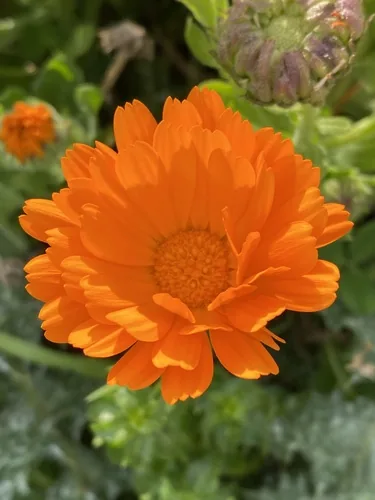
Calendula (*Calendula officinalis*), commonly known as pot marigold, is a hardy annual herb native to southern Europe and the Eastern Mediterranean. It typically grows to a height of 30 to 60 centimeters (1 to 2 feet) and displays bright yellow to deep orange daisy-like flowers. The plant has lance-shaped, slightly hairy leaves and blooms profusely from early summer until frost. Calendula is well-suited to average, moderately fertile, well-drained soils in full sun but can tolerate some shade, especially in hot climates. It is known for its ease of cultivation and ability to self-seed under favorable conditions. Prefers full sun exposure but can tolerate partial shade, particularly in hotter climates. Thrives in moderately fertile, well-drained soils. Regular watering is essential, especially during dry periods, to maintain consistent soil moisture without waterlogging. Propagated primarily through direct sowing of seeds in the garden after the danger of frost has passed. Seeds can also be started indoors 6 to 8 weeks before the last expected frost. Germination occurs within 5 to 15 days at temperatures between 15 to 20°C (59 to 68°F). Flowers are harvested when fully open, typically in the morning after dew has dried. Regular harvesting encourages continuous blooming. Petals can be used fresh or dried for culinary and medicinal purposes.
Permaculture Functions
- Edible: ray petals color butter, rice, and salads when pulled from fully open heads and used fresh or dried -- without the bitter green base of each floret.
- Medicinal: resin-rich florets infuse into oils and salves for traditional skin-soothing applications -- where patch tests and clean harvest matter more than hype.
- Pollinator: composite heads offer accessible pollen and nectar to small bees and syrphid flies from early summer -- until frost in cool, sunny rows.
- Wildlife Attractor: Ripening Calendula officinalis seeds feed finches and other small seed-eaters -- if some heads are left to mature past the cut-flower stage.
- Pest Management: can host aphid colonies that concentrate prey for lady beetles and lacewings -- when planted beside brassicas, then remove worst heads if colonies explode.
- Ground Cover: forms a branching leafy mat between taller crops that shades soil surface and blocks weed germination -- until the annual cycle ends.
Threats & Pressure