About
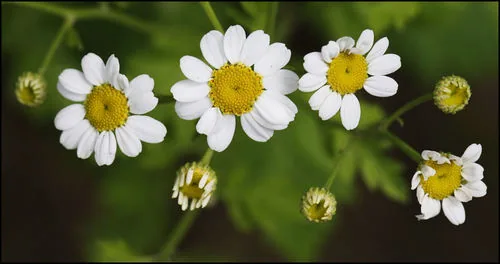
Feverfew is the bitter daisy your herbalist cousin mentions when migraines show up. Science on parthenolide is messy; tradition is loud. It self-sows like it pays rent in seeds — deadhead if you dislike chaos. In subtropical and tropical Americas it grows as a short-lived perennial or enthusiastic biennial depending on summer cruelty; afternoon shade reduces melt. Full sun to light afternoon shade in hot humid summers. Average, well-drained garden soil; tolerates lean conditions once established. Moderate water; soggy winter crowns rot quietly. Seeds: sow on surface; light for germination. Division: split crowns in spring or fall for clones with known chemistry (still variable). Harvest Fever Few aerial parts in early flowering for many mint-family uses -- oils shift after full bloom. Dry in shade with airflow between 95-110°F (35-43°C) until crisp; mold invalidates the batch. Label harvest date and plant part -- winter you will not remember which jar was optimism.
Permaculture Functions
- Medicinal: Tanacetum parthenium leaves harvested at first corymb open carry parthenolide tied to migraine-prevention trials -- standardized extracts interact with liver enzymes, so daily medicinal doses belong with clinicians, not kitchen optimism alone.
- Pollinator: Small white-ray heads offer reachable pollen to syrphids and small native bees on unmowed edges -- when turf managers have already scalped lawn alternatives in zone 5-9 heat.
- Pest Management: Intercropping papers cite modest whitefly disturbance on adjacent tomatoes when feverfew forms dense scent walls -- effect sizes stay small next to real IPM scouting for greenhouse whitefly flights.
- Ornamental: Finely cut mounded foliage lifts daisy buttons all summer for cottage borders that tolerate either deadheading discipline or cheerful self-seed chaos -- along gravel paths.
Companion Planting
Threats & Pressure