About
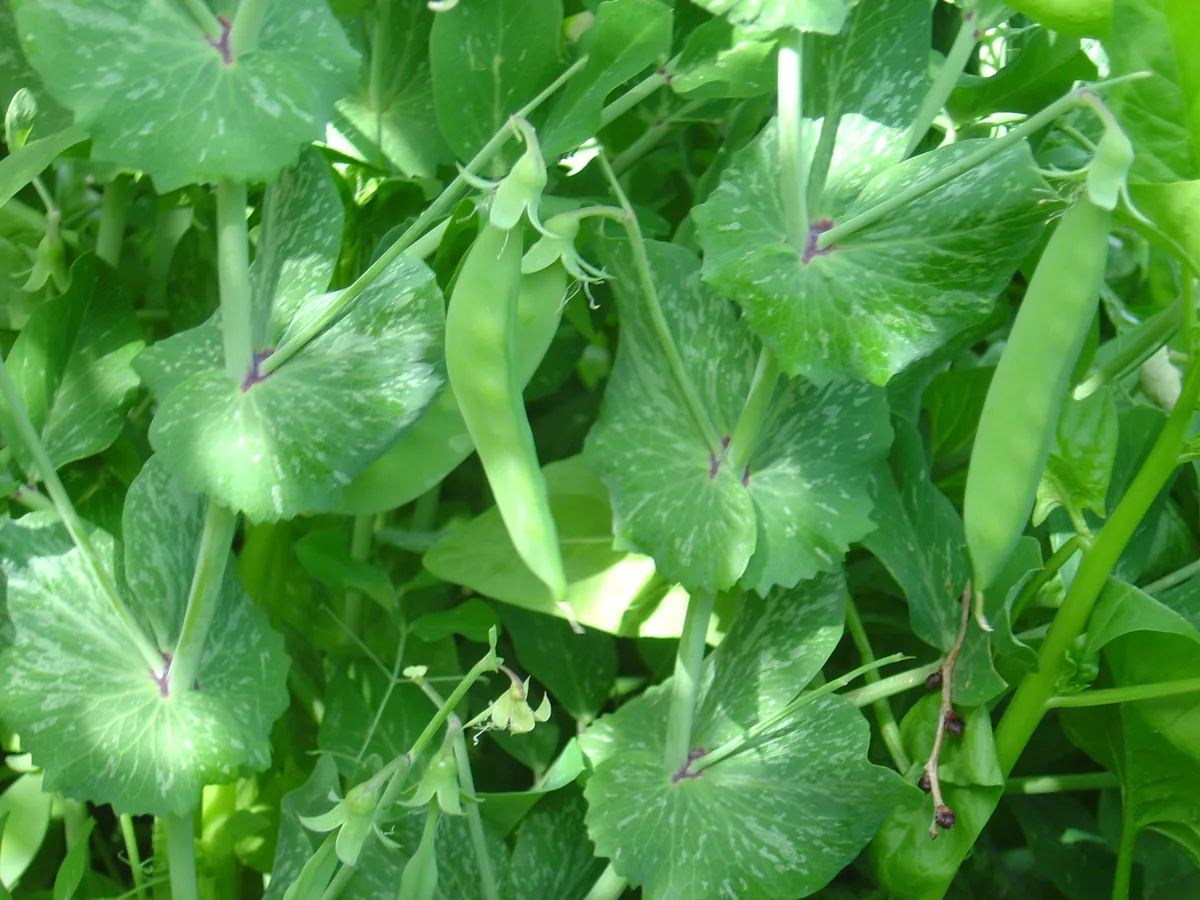
Snow peas are herbaceous annual vines that can reach up to 2 meters (6.5 feet) in height. They have compound leaves with 1-3 pairs of oval to elliptic leaflets and produce butterfly-shaped flowers in clusters of 2-3, which can be white, pink, lavender, or purple. The plant yields flat, thin, and tender pods, typically 2.5-7 cm (1-2.8 inches) long, containing 5-7 small, flat seeds. These pods are harvested and consumed whole before the seeds fully develop. Snow peas thrive in cool seasons and prefer well-drained, moderately rich soil. They are commonly grown on trellises to support their climbing habit. Snow peas are propagated by direct seeding. Sow seeds 2-3 cm (0.8-1.2 inches) deep and 2.5 cm (1 inch) apart in rows. Inoculating seeds with Rhizobium leguminosarum before planting can enhance nitrogen fixation, especially in soils where peas haven't been previously grown. Snow peas prefer full sun, especially when sown early or late in the year, but can tolerate partial shade when sown in late spring. They require consistent moisture, with well-drained soil to prevent root rot. Mulching helps retain soil moisture and regulate temperature. Harvest snow peas approximately 9-10 weeks after sowing, when pods are flat and before seeds fully develop. Regular harvesting encourages continuous pod production. Delaying harvest can result in tougher pods and reduced yield.
Permaculture Functions
- Edible: Pisum sativum var. saccharatum flat pods stay stringless when picked before peas swell -- eat raw or flash-stir so sugars never convert to starch in the cooler.
- Nitrogen Fixer: Root nodules finish the cool-season pulse before summer tomatoes move in -- snap vines at soil line and drop residue for the next rotation.
- Ground Cover: Twining foliage carpets pea-and-oat nurse strips between wide vegetable beds -- until warm crops transplant.
Threats & Pressure
- Aphids
- Banded Cucumber Beetle
- Bean Aphid
- Bean Leaf Beetle
- Bean Weevil
- Corn Earworm
- Cowpea Curculio
- Cutworms
- Fall Armyworm
- Kudzu Bug
- Locust Borer
- Locust Leaf Miner
- Lubber Grasshopper
- Pea Moth
- Pea Weevil
- Reniform Nematode
- Root Aphid
- Soybean Looper
- Spittlebugs
- Stink Bug
- Striped Cucumber Beetle
- Spotted Cucumber Beetle
- Brown Marmorated Stink Bug
- Harlequin Ladybird
- Velvetbean Caterpillar