About
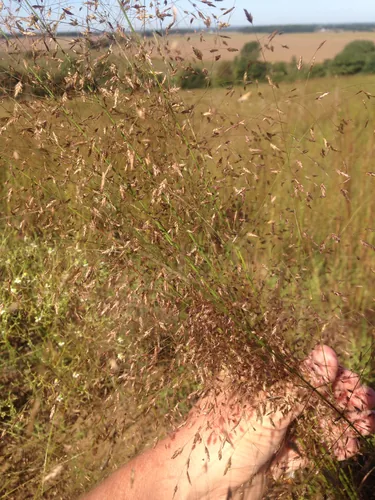
Sand lovegrass (Eragrostis trichodes) is a warm-season bunchgrass of central North American sandy prairies and roadsides, producing large, airy panicles that catch light like smoke on stems often 2–4 feet (60–120 cm). It roots quickly on disturbed sand, making it useful for erosion control during early succession while longer-lived prairie species establish. In ornamental design it pairs with purple lovegrass for a two-stage lovegrass drama nobody asked for but everyone photographs. Full sun for strongest stems and fullest panicles. Well-drained sandy to coarse loamy soils suit it; tolerates drought and lean fertility. Avoid wet clay; water deeply only during establishment or extreme drought. Sow seed in warm soil; lightly cover. Divide bunches in spring if necessary. Cut back in late winter before new growth. Cut inflorescences for dried arrangements when color is tan-gold but before heavy shattering. Leave seed for birds if winter structure is acceptable. Peak display tracks late-summer heat.
Permaculture Functions
- Erosion Control: Eragrostis trichodes germinates fast on highway cuts and blow-sand wounds -- gives slower prairie forbs a root scaffold to establish against in the first wet season.
- Ornamental: Huge airy panicles catch backlight like pale smoke above knee-high foliage in lean meadow mixes -- that skip irrigation guilt.
- Wildlife Attractor: Tiny seeds feed sparrows and longspurs -- while bunch bases shelter insects at soil level through winter dormancy.
- Biomass: Standing straw-colored stems chop into coarse mulch that feeds fungal chains on carbon-starved coastal sands -- when timed after seed shatter.
Companion Planting
- Short-lived on rich irrigated beds—lean sand extends performance
- Self-sowing in gravel—delightful or deplorable per driveway politics
Threats & Pressure