About
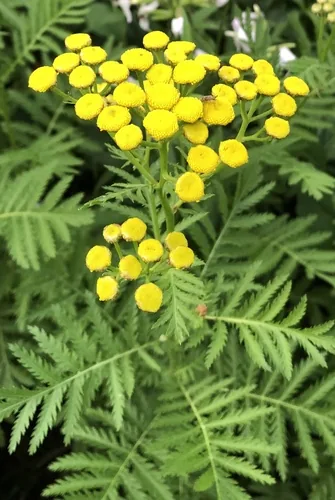
Common tansy (Tanacetum vulgare) is a punchy aromatic perennial: ferny pinnate leaves and flat yellow button clusters that look like daisies that gave up on petals. Upright stems commonly reach 2–4 feet, spreading by rhizomes where summers are not savage—orderly gardeners use barriers or pots. subtropical and tropical Americas: Heat and humidity stress it; central Florida upward microclimates might host it as a short-lived curiosity, but the subtropical/tropical default is struggle and mildew poetry. If you grow it anyway for insectary experiments, place it in breezy sun with sharp drainage and accept that Puerto Rico lowlands may simply compost your dreams. Full sun for compact growth and strongest oils; half-day sun invites floppy stems. Moderate moisture; drought-tolerant once established but crisp soil reduces rhizome swagger—avoid swamp pots. Divide rhizomes in spring or fall; replant immediately and water until new shoots assert dominance. Sow seed in cool weather; tansy self-sows where winters chill seeds—contain volunteers if local rules say behave. Harvest flowering tops for drying when fully open but before browning; wear gloves—oils are serious chemistry. Toxicity is real for livestock and careless humans; label beds like adults, not influencers.
Permaculture Functions
- Pest Management: Tanacetum vulgare thujone-rich foliage shows up in companion rows where growers hope to confuse flies -- still scout because volatile plumes are not fence wire.
- Medicinal: Historic vermifuge teas carry neurotoxic thujone loads -- modern herbalists meter drops while wildlife agencies list tansy as liver-toxic browse for livestock.
- Ornamental: Brass-button clusters stand knee-high along cottage borders until rhizomes escape into neighboring crowns -- without edging discipline.
Companion Planting
Threats & Pressure