About
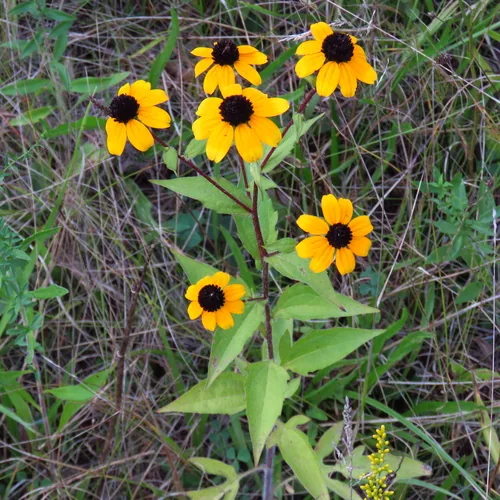
Thin-leaved coneflower (Rudbeckia triloba) is a short-lived perennial or biennial of North American prairies and disturbed ground, with small yellow rays, dark central cones, and deeply lobed leaves on branched stems often 2–5 feet (60–150 cm). It self-sows enthusiastically into sunny gaps, feeding pollinators during mid-to-late summer. Treat it as a dynamic meadow element—not a static foundation shrub. Full sun for densest bloom; light shade reduces flower count. Average to slightly moist, well-drained soils suit it; tolerates poor soils and short drought once established. Mulch lightly; avoid waterlogging. Sow seed outdoors in fall or cold-stratify for spring trays. Allow self-sowing where volunteers are welcome; deadhead near paths if pavers matter. Cut flowers when rays are fresh for short bouquets. Leave seed heads for finches. Peak bloom tracks mid-to-late warm season heat.
Permaculture Functions
- Pollinator: Rudbeckia triloba scores of miniature yellow cones bloom for weeks along prairie edges late summer -- small bees step across platforms larger hybrids ignore.
- Wildlife Attractor: Goldfinch flocks shred seed heads -- while hollow stalks shelter cavity-nesting bees when winter cleanup waits for crocus thaw.
- Ornamental: Open-branching vase habit drifts among little bluestem matrices -- without squat mounding cultivar energy.
- Biomass: Tall annual-style growth dumps carbon-heavy stems after two years -- disturbance plantings leapfrog toward oak hickory shade as organic matter accumulates.
Companion Planting
- Self-sowing — can overwhelm tiny formal beds without editing
- Short-lived individuals—plan reseeding or succession species
Threats & Pressure