About
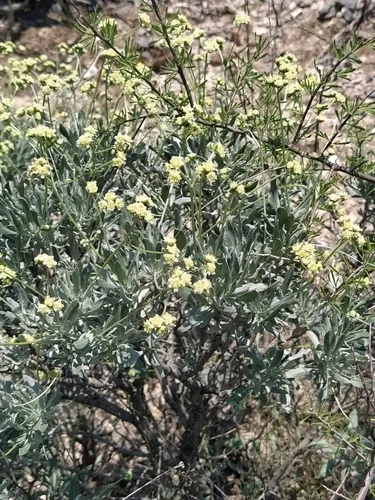
Guayule is a drought-adapted, resinous shrub from the Chihuahuan Desert region that stores natural rubber in its bark and tissues. Silvery, finely divided leaves and a rounded, many-branched frame typically reach 3 feet tall and wider in favorable sites, reading like a compact sagebrush that wants limestone grit and air movement. In subtropical and tropical Americas it is a specialty dryland crop for frost-free pockets with sharp drainage—humid low spots invite root rots, while Puerto Rico’s dry southern coasts and Florida’s well-drained coastal berms can mimic its native bajada conditions if you refuse to over-irrigate. Think permaculture fence lines and biomass hedges, not bog gardens. Full sun for maximum resin and rubber precursor production. Deep, very well-drained soil; raised beds or coarse sand mixes in rainy climates. Water deeply but rarely once established; wet feet kills faster than dry air. Seeds after last cool spell; surface sow or lightly cover in warm media (germination can be slow and irregular). Semi-hardwood cuttings in late warm season with bottom heat and intermittent mist. Transplant container-grown liners into the field at the start of the rainy season so roots chase moisture downward. For rubber or resin trials, harvest whole shrubs on a multi-year rotation after lignification, processing bark while fresh. For biomass mulch, coppice or heavy prune after flowering when tissues are firm but before winter chill stress in marginal zones.
Permaculture Functions
- Fiber: Parthenium argentatum stores natural rubber and resin in bark and stem latex -- specialty growers process chips for hypoallergenic rubber and terpene coproducts while backyard plantings still deliver erosion armor even if you never run a mill.
- Biomass: Resinous, fine-cut foliage and wiry stems chip into slow-decaying mulch for arid pathways -- carbon-heavy prunings suit fire-managed hedges where you want long-lasting surface cover instead of quick green compost.
- Erosion Control: Deep taproot and many-branched crown bind coarse, fast-draining slopes where shallow-rooted turf scours -- pair with agave or prickly pear so each species occupies different root horizons along a dry fence line.
- Border Plant: Silvery, aromatic shrubs knit into a permeable screen along property edges -- full sun and air movement keep resin production honest; wet clay inland still rots crowns faster than desert rhetoric admits.
Companion Planting
- Tamarisk
- Russian Olive
Threats & Pressure