About
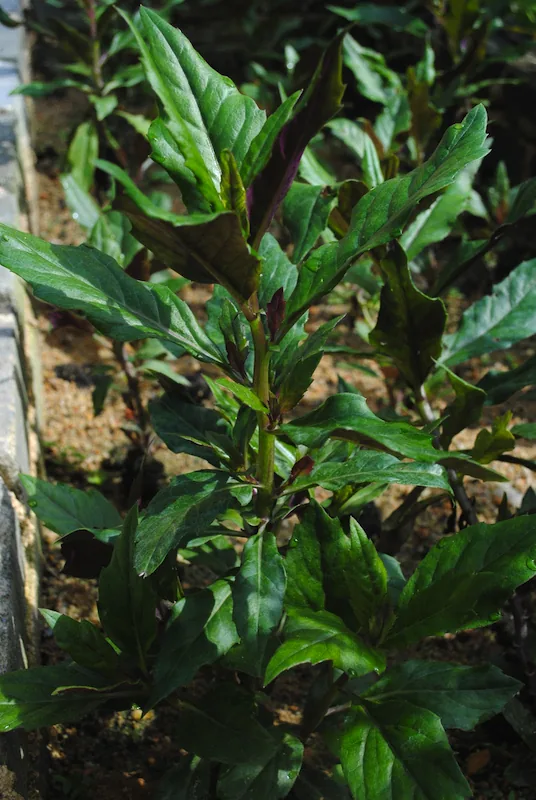
Okinawa Spinach (Gynura bicolor) is a fast-growing, hardy perennial green that thrives in warm, humid climates. It features vibrant green leaves with striking purple undersides, making it both ornamental and functional in permaculture systems. The leaves are tender with a mild, slightly nutty flavor and are widely used in Asian cuisine. It is an excellent ground cover plant, helping to suppress weeds while improving soil moisture retention. Prefers partial shade but tolerates full sun in cooler climates. Requires consistent moisture but does not tolerate waterlogging. Thrives in well-drained, fertile soil with organic matter. Cuttings: Best propagated through stem cuttings, which root easily in water or soil. Division: Can be divided to establish new plants. Seeds: Rarely propagated by seed due to difficulty in germination. Leaves can be harvested continuously as needed once the plant is established. Best harvested in the morning for optimal flavor and texture. Regular harvesting encourages bushier growth.
Permaculture Functions
- Edible: Purple-backed leaves are milder than longevity spinach kin -- eat young tips raw in mixed greens; older blades need quick steam to lose chalky texture.
- Medicinal: Hakka kitchens use the vine for “cooling blood” soups -- same diabetes medication cautions as other Gynura species apply if you drink daily pots.
- Wildlife Attractor: Small yellow composites open on stems that crawl under fruit trees and still pull hoverflies into partial shade -- where tall sunflowers will not grow.
- Mulcher: Monthly shearings through wet season make soft mulch under papaya -- where coarse grass would leave thatch pockets that hold mosquitoes.
- Dynamic Accumulator: Fast growth in composted rows concentrates potassium in leaf tissue you can weigh -- before and after a bed-side dress to see response in one month.
- Erosion Control: Prostrate stems layer on swale berms in Florida summer rain -- slowing sheet flow better than bare sod staples the first year after earthworks.
- Animal Fodder: Rabbits and laying hens eat fresh leaves when offered after morning harvest -- rotate patches so plants recover before stems lignify.
- Ground Cover: Fills gaps between taro mounds where foot traffic is light -- not a walk-tolerant lawn replacement like sunshine mimosa, but finer textured under benches.
Companion Planting
- Onion
- Garlic
Threats & Pressure