About
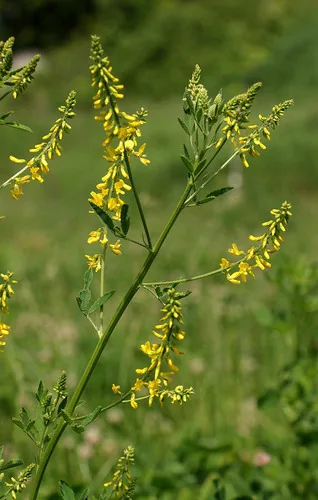
Yellow sweet clover (Melilotus officinalis) is a biennial legume with bright yellow pea-flowers on tall branching stems and trifoliate leaves that smell sweetly of coumarin—especially when dry. First year forms a rosette; second year rockets upward 1–2 m (3–6 ft), sets seed, and finishes the job. It has escaped cultivation in many regions; use it as a managed cover crop or bee forage, not as a gift to fragile natural areas. In subtropical and tropical Americas it performs in cool-season windows; summer heat often ends the cycle quickly. Full sun for maximum bloom and nectar. Tolerates droughty, poor soils; still benefits from irrigation during establishment. Avoid waterlogging—legume roots need air even when rhizobia are working. Scarify hard seed or buy inoculated clover seed; broadcast in fall or early spring depending on frost calendar. Thin dense stands if saving seed; isolation helps keep lines true. Incorporate before hard seed set if using strictly as green manure—late timing means volunteer melilot next year. Cut at early bloom for maximum biomass and manageable coumarin considerations in forage contexts. Beekeepers value full bloom; land managers balance pollinators against seed rain.
Permaculture Functions
- Nitrogen Fixer: Melilotus officinalis biennial roots nodulate heavily -- incorporate first-year tops or second-year early bloom to bank N for the following corn or veg row.
- Biomass: Second-year stems hit 2 m with hollow pith -- roll-crimp for mulch or bale; late cutting risks hard seed return.
- Wildlife Attractor: Cream-yellow spikes drip nectar for honeybees during peak bloom -- roadside patches hum like transformers.
- Animal Fodder: High-protein hay when cut early and dry -- spoiled sweet clover hay causes coumarin bleeding in cattle; mold is the enemy, not the clover itself.
Companion Planting
Also mentioned as companions:
- Corn
Not yet profiled in PermiePortal
Threats & Pressure
- Aphids
- Banded Cucumber Beetle
- Bean Aphid
- Bean Leaf Beetle
- Bean Weevil
- Clover Weevils
- Corn Earworm
- Cowpea Curculio
- Fall Armyworm
- Kudzu Bug
- Locust Borer
- Locust Leaf Miner
- Lubber Grasshopper
- Pea Moth
- Pea Weevil
- Reniform Nematode
- Root Aphid
- Soybean Looper
- Spittlebugs
- Stink Bug
- Striped Cucumber Beetle
- Spotted Cucumber Beetle
- Brown Marmorated Stink Bug
- Harlequin Ladybird
- Velvetbean Caterpillar