About
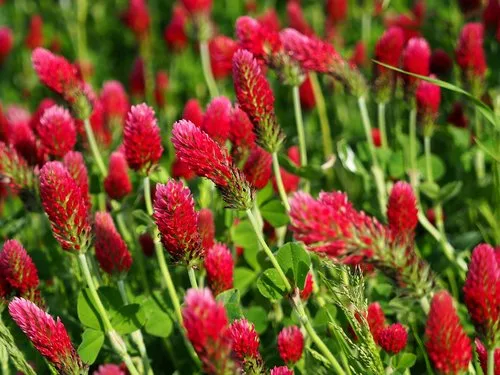
Crimson clover (Trifolium incarnatum) is a cool-season annual cover crop known for its crimson flower heads and dense, velvety foliage. It is native to the Mediterranean region and typically grows 30–80 cm (12–31 in) tall. In permaculture, it’s a triple-duty plant: it fixes nitrogen, covers soil quickly when beds would otherwise be bare, and produces a dependable green-manure mulch that feeds the next crop instead of letting nutrients evaporate or wash away. Full sun produces the best biomass and bloom; light shade reduces density. Moderate water helps germination and early growth; once established it handles typical rain patterns well. Prefers well-drained soil with compost; waterlogged ground reduces vigor. Performs best in cool seasons; summer heat slows or kills the plant. Seeds (autumn sow): direct-seed in fall for winter growth; germination commonly takes 4–7 days with consistent moisture. Seeds (spring sow): sow in early spring when soils warm; expect a slower start and earlier die-off in hot periods. Seeded cover thickening: overseed into existing beds where you want faster ground cover and fewer weeds. For green manure: cut or mow before seed pods form (often around first bloom) so it turns into soil rather than becoming volunteer clutter. For mulch: chop residues and leave as surface cover for soil life; let it break down gradually. For seed: allow stands to flower fully and dry; harvest pods when dry and store seed cool and dry.
Permaculture Functions
- Nitrogen Fixer: Trifolium incarnatum is an annual legume that still packs eighty to a hundred pounds of N per acre (90-110 kg/ha) equivalent when terminated at first bloom -- drill after summer cash crop comes off to catch autumn rains.
- Mulcher: Soft stems and leaves flail into a fast-green manure layer that feeds soil fungi through winter -- crimp or mow before woody stems lignify or mulch quality drops and breakdown slows.
- Erosion Control: Seedlings carpet bare beds in October where summer vegetables left soil naked to winter rains -- living cover cuts sheet erosion on five percent slopes better than straw that blows off before roots grab.
- Ground Cover: Low rosette architecture smothers henbit and chickweed germination in the shoulder seasons -- plan termination before dense self-seeding if you hate crimson volunteers in next spring carrots.
- Pollinator: Bright red tubular flower heads are nectar-heavy for bumblebees and honeybees -- reliable in cool spring or fall cover-crop windows when many other flowering plants are absent.
- Wildlife Attractor: Blooming strips feed diverse bees and seed-eating birds -- leave some heads to mature on field margins for extended wildlife value.
- Dynamic Accumulator: Hairy trifoliate leaves and stems return phosphorus and potassium in ash-green tissue -- chop-and-drop at green stage before stems lignify for maximum nutrient release.
- Animal Fodder: High-protein forage for ruminants when harvested before stems lignify -- confirm local guidance on bloat risk with lush legume stands.
- Border Plant: Dense rows mark field edges and orchard alleys with crimson color -- fixes nitrogen between tree rows while defining the visual boundary.
- Pest Management: Thick stands smother winter annual weeds early -- rotate away from other legumes to break pest cycles.
Field Observations
- No field observations yet
Companion Planting
Threats & Pressure
- Aphids
- Spittlebugs
- Slugs
- Banded Cucumber Beetle
- Bean Aphid
- Bean Leaf Beetle
- Bean Weevil
- Clover Mites
- Corn Earworm
- Cowpea Curculio
- Fall Armyworm
- Kudzu Bug
- Locust Borer
- Locust Leaf Miner
- Lubber Grasshopper
- Pea Moth
- Pea Weevil
- Reniform Nematode
- Root Aphid
- Soybean Looper
- Stink Bug
- Striped Cucumber Beetle
- Spotted Cucumber Beetle
- Velvetbean Caterpillar