About
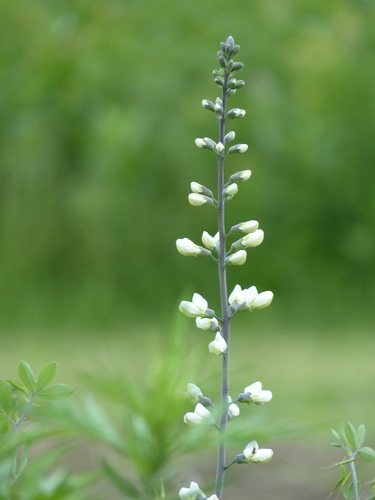
Baptisia is the perennial legume that builds its own fertilizer, then flowers like a lupine that skipped leg day and went straight to architecture. Deep taproot; do not plan on moving it twice. Fine through 9a as long as soil drains; intense heat plus wet can shorten lifespan—give it space and sun, not swale soup. Sun and water: Full sun for stiff stems and best bloom. Average to lean, well-drained soil; drought-tolerant once established. Overwatering and heavy clay are the usual killers. ✂️ Propagation: Scarified seeds (slow, honest work); division of young clumps if you must; transplant small plants only.
Permaculture Functions
- Nitrogen Fixer: Root nodules feed the soil nitrogen budget in perennial borders and savanna-style plantings, supporting neighbors through root exchange and eventual litter drop.
- Ornamental: Indigo spikes and shrub-like mounds read as structural perennials—big architecture without woody winter skeleton angst.
- Wildlife Attractor: Long-season flowers pull bumblebees and other pollinators like a tab was left open; seed pods extend winter interest for birds that work dry legumes.
- Dynamic Accumulator: Deep taproot mines subsoil minerals that return when tops die back, offering responsible chop-and-drop after dormancy instead of bagged fertilizer theater.
Practitioner Notes
- Deep taproot hates disturbance—direct-sow or plant tiny liners; big specimens sulk for years after rough moves.
- Black seed pods rattle all winter—decorative, but open one indoors and you vacuum seeds for weeks.
- Flowers age from indigo to parchment; cut spent stalks if you hate the brown torch look.
Companion Planting
Good Neighbors
- Coneflower
- Switchgrass
- Little bluestem
Cautions
- Wet, stagnant soil
- Heavy root disturbance once mature
Pest Pressure
Known Threats — Organic Solutions Only
Aphids
Aphidoidea
Banded Cucumber Beetle
Diabrotica balteata
Bean Aphid
Aphis fabae
Bean Leaf Beetle
Cerotoma trifurcata
Bean Weevil
Acanthoscelides obtectus
Brown Marmorated Stink Bug
Halyomorpha halys
Caterpillars
Lepidoptera Larvae
Corn Earworm
Helicoverpa zea
Cowpea Curculio
Chalcodermus aeneus
Fall Armyworm
Spodoptera frugiperda
Fusarium Wilt
Fusarium oxysporum
Ganoderma Butt Rot
Ganoderma spp.
Harlequin Ladybird
Harmonia axyridis
Kudzu Bug
Megacopta cribraria
Leafhoppers
Cicadellidae
Locust Borer
Megacyllene robiniae
Locust Leaf Miner
Odontota dorsalis
Lubber Grasshopper
Romalea microptera
Pea Moth
Cydia nigricana
Pea Weevil
Bruchus pisorum
Pythium Root Rot
Pythium spp.
Reniform Nematode
Rotylenchulus reniformis
Root Aphid
Pemphigus spp.
Soybean Looper
Chrysodeixis includens
Spittlebugs
Cercopidae
Spotted Cucumber Beetle
Diabrotica undecimpunctata howardi
Stink Bug
Pentatomidae
Striped Cucumber Beetle
Acalymma vittatum
Velvetbean Caterpillar
Anticarsia gemmatalis
White Rot
Sclerotinia sclerotiorum