About
Groundnut is a twining legume that buries protein-rich tubers like a buried snack stash for people who read ethnobotany for fun. Not the peanut — this is Apios americana, eastern North America’s perennial starch-and-nitrogen combo. In subtropical and tropical Americas it grows vigorously in warm seasons; give it vertical structure or it will audition as a ground-eating kraken. Full sun to light shade; more sun usually means more tubers. Consistent moisture during tuber fill; tolerates wetter soils than many beans. Rich, organic loam rewards you; starvation yields folklore-level disappointment. Tubers: Plant dormant tubers in spring like mini-potatoes. Rhizome divisions from established patches. Seeds: Slow; stratification helps; clones are faster food security. Dig tubers after frost kills vines or in late fall once vines yellow. Start eating small tubers; large ones can stay fibrous — breeding lines differ.
Permaculture Functions
- Edible: Apios americana forms chains of high-protein tubers on rhizomes -- boil or roast like new potatoes after frost kills vines, and cook mature seeds because raw legume chemistry is not your friend.
- Nitrogen Fixer: Rhizobial nodules on climbing stems fix atmospheric nitrogen -- run the vine on sunflower stalks, corn, or trellis so leaf drop and root turnover feed the bed below without synthetic N.
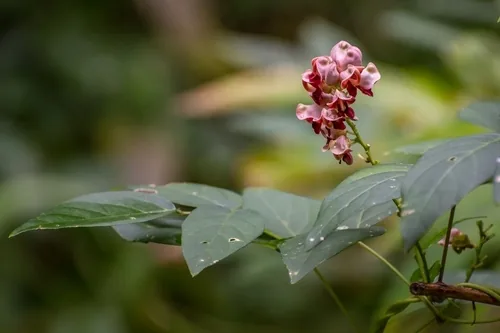
- Wildlife Attractor: Pink-purple pea flowers feed long-tongued bees, and caterpillars of specialist legume feeders may appear -- accept some leaf holes if you want native insect completion in the guild.
- Ground Cover: Given horizontal space, the twining canopy blankets soil in late summer -- it will smother weeds under the vine but needs vertical structure so it does not bury neighboring crops.
Companion Planting
- Tiny pots and zero trellis — chaos follows
Threats & Pressure
- Aphids
- Banded Cucumber Beetle
- Bean Aphid
- Bean Leaf Beetle
- Bean Weevil
- Corn Earworm
- Cowpea Curculio
- Fall Armyworm
- Japanese Beetles
- Kudzu Bug
- Locust Borer
- Locust Leaf Miner
- Lubber Grasshopper
- Nematodes
- Pea Moth
- Pea Weevil
- Reniform Nematode
- Root Aphid
- Soybean Looper
- Spittlebugs
- Stink Bug
- Striped Cucumber Beetle
- Spotted Cucumber Beetle
- Brown Marmorated Stink Bug
- Harlequin Ladybird
- Velvetbean Caterpillar