About
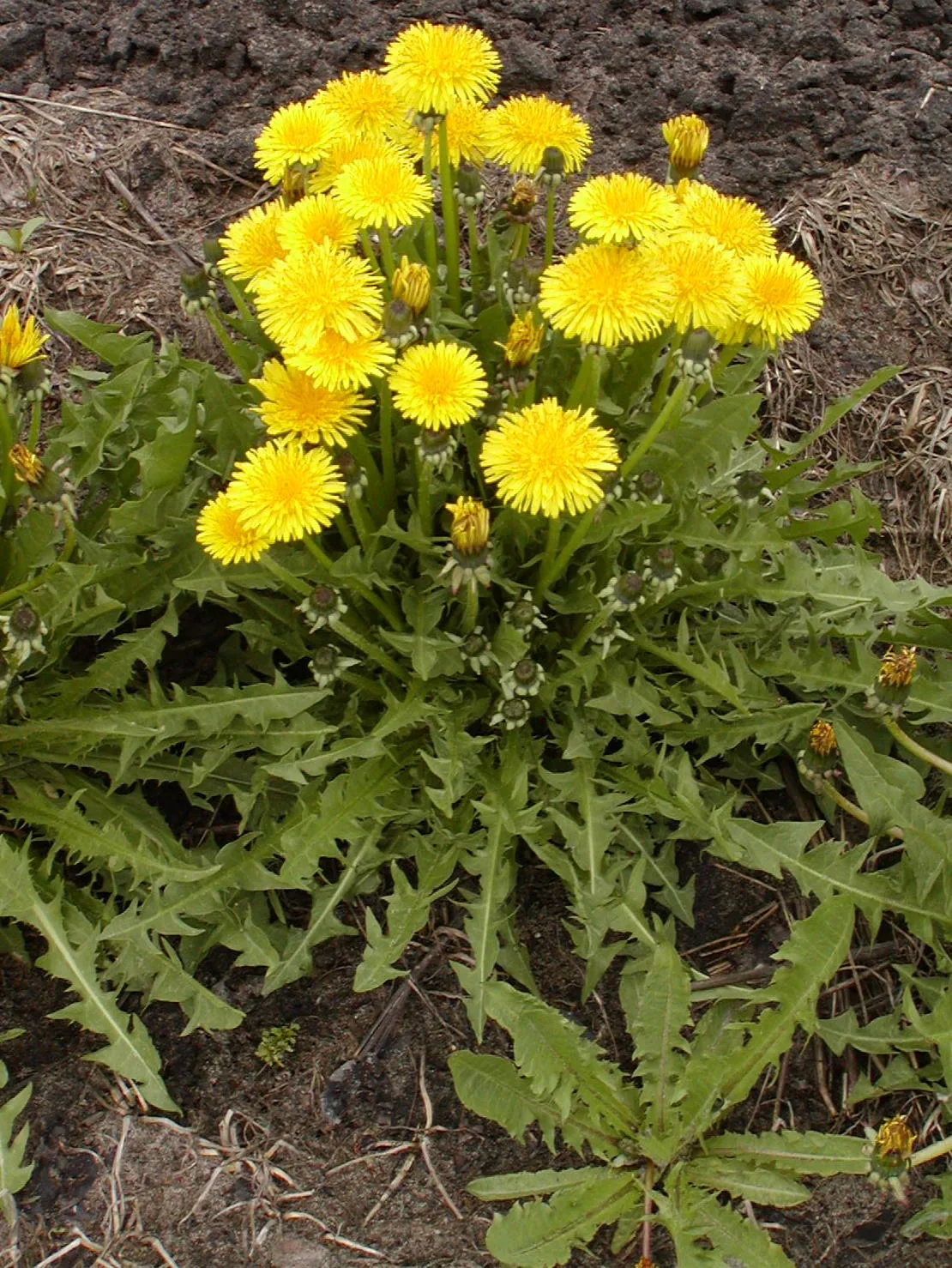
Dandelion (*Taraxacum officinale*) is a hardy, herbaceous perennial native to Eurasia, now widespread across temperate regions globally. It features a basal rosette of deeply toothed, lance-shaped leaves measuring approximately 5–25 cm (2–10 inches) in length. The plant produces bright yellow composite flowers on hollow, leafless stalks that can reach up to 30 cm (12 inches) tall. Following pollination, the flowers develop into spherical seed heads known as "clocks," which disperse seeds via wind. Seeds: Sow seeds directly on the soil surface in early spring or fall, as they require light for germination. Ensure the soil remains moist until seedlings establish. Division: Mature plants can be divided by carefully excavating the taproot and separating offsets, which can then be replanted. Sun: Prefers full sun but can tolerate partial shade. Optimal growth occurs with at least 6 hours of direct sunlight daily. Water: Dandelions are drought-tolerant once established but thrive in consistently moist, well-drained soils. Overwatering should be avoided to prevent root rot. Leaves: Young leaves are best harvested in early spring before the plant flowers, as they are less bitter. These can be used fresh in salads or cooked. Roots: Harvest roots in late fall when nutrient concentration is highest, typically after the first frost. Roots can be roasted for beverages or used in herbal preparations. Flowers: Collect fully opened flowers on dry, sunny days for use in culinary dishes or to infuse oils.
Permaculture Functions
- Edible: Taraxacum officinale leaves stay mild in rosettes mowed short or shaded -- roots dug after first frost roast to a bitter coffee analog; yellow ray petals strip cleanly into wine must if you pull bitter green calyx bases off first.
- Medicinal: Leaf and root tinctures show up in herbal materia medica for hepatic and diuretic protocols -- potassium-rich leaf means diuretic effect is real; monitor blood pressure meds and electrolytes with a clinician if you drink daily quarts.
- Dynamic Accumulator: Deep taproot pulls calcium and potassium into spring leaves that read dark green on compost-edge plants -- when you smother thick mats under cardboard, that mineral load stays in the topsoil organic pool instead of washing past mulch.
- Pollinator: Early composite heads open flat on the first mild afternoons of the year when orchard trees are still tight buds -- pollen-only phase feeds small native bees before nectar fills later in the bloom.
- Ground Cover: Basal rosettes tile lawn-thin turf and survive mower blades set at four inches -- dense cover catches irrigation splash on vegetable berms where bare soil would crust.
Threats & Pressure