About
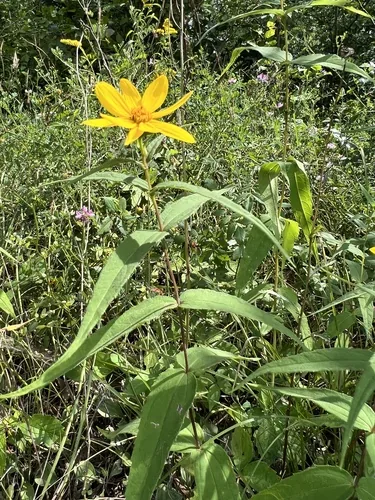
Woodland sunflower (Helianthus divaricatus) is a rhizomatous perennial sunflower of dry to mesic woodland edges, openings, and savannas in eastern North America. Slender stems carry bright yellow sunflowers in mid to late summer; leaves are rough and often sessile. It spreads into sunny drifts without demanding swamp soils, filling a gap between prairie sunflowers and deep-shade forbs. Full sun to bright part shade; more shade reduces flowering and encourages taller reach. Average moisture suits it; tolerates dry shade once established better than many Helianthus. Avoid standing water unless slope drains; rhizomes rot in anaerobic muck. Divide rhizomes in early spring or late fall; replant pieces with buds. Sow seed after cold stratification; germination in warm soil. Cut back dead stems in late winter for tidy gardens or leave standing for overwintering insects. Cut flowers for bouquets when petals fully open; stems may need support in rich soil. Leave seedheads for finches if you are not collecting. Chop fallen stems for mulch after frost where expansion is welcome.
Permaculture Functions
- Pollinator: Helianthus divaricatus open yellow ray heads feed bees in partial shade -- rare sunflower niche for dry woodland edges.
- Wildlife Attractor: Goldfinches shred late-season heads -- leave hollow stems for overwintering cavity-nesting bees.
- Erosion Control: Rhizomatous spread knits dry slopes after trail cuts -- give room or expect friendly takeover.
- Biomass: Tall stems chop-and-drop into savanna plantings -- faster than oak litter, slower than grass clippings.
Companion Planting
Also mentioned as companions:
- Gray Goldenrod
Not yet profiled in PermiePortal
- Rhizome spread — give room or mow margins in small formal beds
- Powdery mildew — improve airflow if humid summers coat lower leaves
Threats & Pressure