About
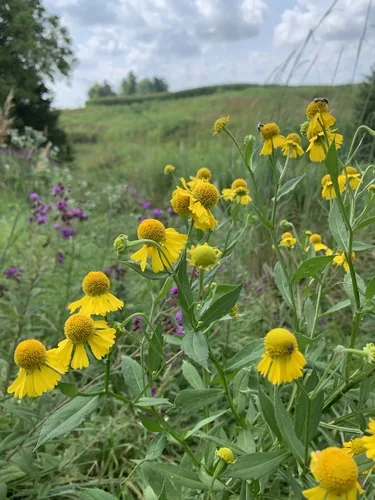
Swamp sunflower (Helianthus angustifolius) is a robust herbaceous perennial sunflower of wet prairies, roadside ditches, and freshwater marshes from the eastern United States through Texas. Plants spread by rhizomes into tall golden walls 4–6 feet (1.2–1.8 m) in bloom, with narrow leaves and many small sunflower heads. Late-season nectar supports migrating pollinators when goldenrod companions peak. Full sun for maximum bloom density; tolerates bright part sun with fewer flowers. Thrives in moist to wet soils; also handles average garden beds if watered during drought. Rhizomes wander—plan barriers if you need geometric obedience. Divide rhizomatous clumps in late winter before new growth; replant chunks with buds. Sow seed after last frost; keep trays moist. Cut back dead stems in late winter to leave standing habitat, or mow after seed drop if expansion must be checked. Cut flowers for bouquets at first color; stems are tall—stake in windy sites. Seeds are small but feed finches if heads remain; chop biomass for mulch after frost kills foliage.
Permaculture Functions
- Pollinator: Helianthus angustifolius narrow-leaf sunflowers stack gold bands through September fog -- when goldenrod starts browning along Gulf wet prairies.
- Wildlife Attractor: Sunflower heads shrink into finch buffets -- while hollow stems house cavity-nesting bees if you delay mowing until spring warm-up.
- Erosion Control: Aggressive rhizomes armor pond spoil berms against fetch -- while roots drink nitrate runoff from upslope lawns.
- Biomass: Eight-foot stems chop into soggy-zone mulch that feeds ducks and decomposition fungi -- without hauling chips downslope.
Companion Planting
Also mentioned as companions:
- Ironweed
Not yet profiled in PermiePortal
- Rhizome spread — contain with mowing strips or deep edging in small yards
- Powdery mildew — improve spacing and morning sun exposure in humid climates
Threats & Pressure