About
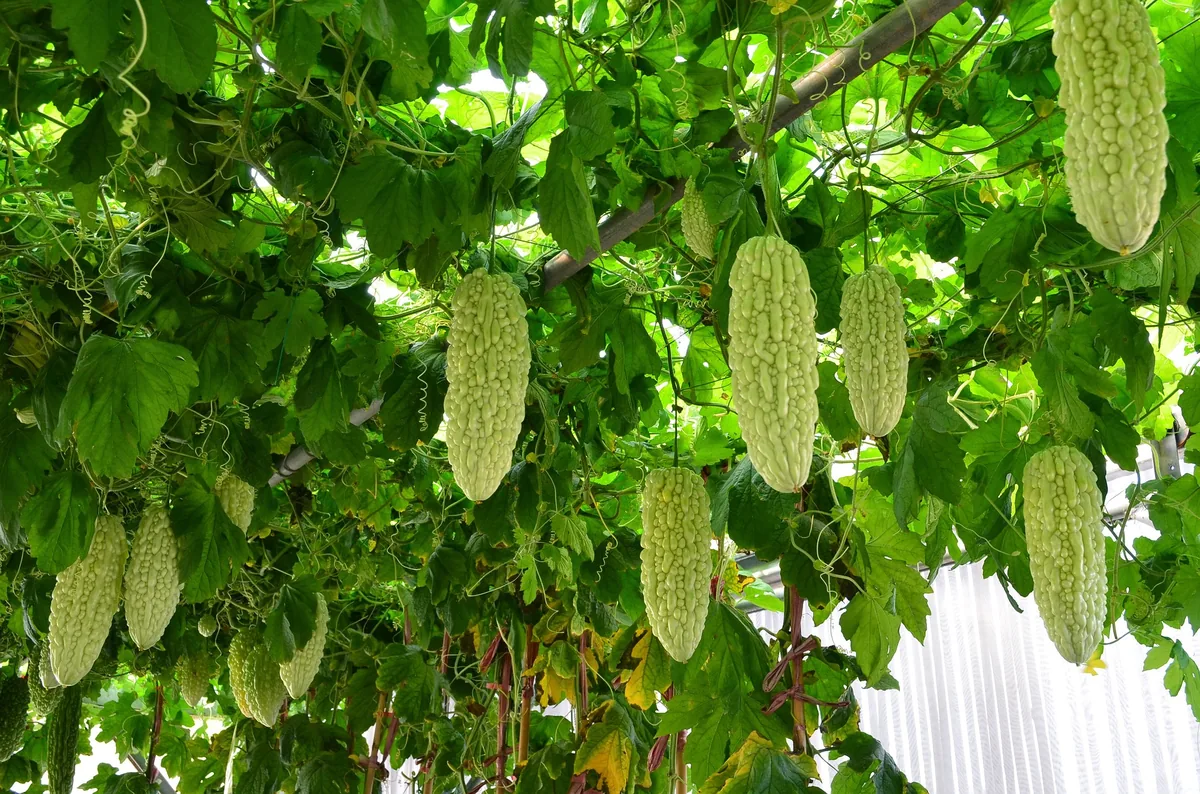
Bitter Melon (*Momordica charantia*) is a tropical and subtropical vine known for its distinctive warty fruit and deeply lobed leaves. The plant is a fast-growing climber, reaching up to 5 meters in length, with thin stems and tendrils that support its ascent. It produces separate male and female yellow flowers on the same plant, relying on insect pollination. The fruit varies in shape and size, typically oblong with a green, bumpy exterior that turns yellow to orange upon ripening. The interior flesh is white to green, crisp, and notably bitter. Bitter Melon thrives in hot, humid conditions and requires full sun and well-drained, fertile soil with a pH between 5.5 and 6.7. Propagation is primarily through seeds, which can be sown directly into the soil after the last frost when temperatures consistently reach around 70°F (21°C). Harvesting occurs when the fruit is green or just beginning to turn yellow, approximately 12-16 weeks after planting. Seeds: Sow seeds directly into the soil after the last frost when temperatures are consistently around 70°F (21°C). Seeds can also be started indoors and transplanted once seedlings are established. Sun: Requires full sun exposure for optimal growth. Water: Prefers consistent moisture; water regularly to keep the soil evenly moist but not waterlogged. Harvest fruits when they are green or just starting to turn yellow, typically 12-16 weeks after planting. The fruit should be firm and 10-20 cm in length, depending on the variety.
Permaculture Functions
- Edible: Momordica charantia warty green fruit stays crisp for stir-fry and stuffed bitter melon while yellow-orange split pods go sweet-slimy for some pickles -- harvest young or pith turns spongy overnight in heat.
- Medicinal: Charantin and polypeptide-P fractions show up in TCM and Ayurveda blood-sugar discussions alongside metformin interaction warnings -- tea is not a dose-controlled pharmaceutical swap without guidance.
- Wildlife Attractor: Bright aril pulp on overripe orange fruit feeds birds that spread seed into fence lines -- pick or bag fruit before split if volunteers are unwelcome near livestock.
- Ground Cover: Twining summer vines tile trellis bases and shade soil between okra rows until frost -- still need vertical support; sprawled on wet mulch invites slug opera.
Companion Planting
Threats & Pressure