About
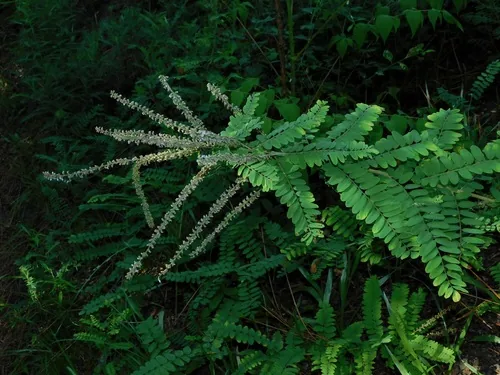
Florida leadplant (Amorpha herbacea) is a low, fine-textured leguminous shrub of sandhills, scrub, and dry pinelands in the southeastern United States, with tiny compound leaves and slender spikes of purple pea flowers that call bumble bees like a polite dinner bell. It is a dwarf cousin in the false-indigo tribe—nitrogen fixation without pretending to be a six-foot meadow statue. Use it in xeric polycultures, pine understories, and roadsides where irrigation is a rumor and sun is abundant. Full sun; requires well-drained, sandy or rocky soils and tolerates drought once established. Not for heavy clay swales or chronically irrigated turf margins. Mildly salt-tolerant on some coastal sands but not a mangrove. Hardy through warm-temperate winters; stems may die back after hard freezes and resprout from crown. Scarified seed sown warm improves germination speed. Softwood cuttings under humidity can clone selected forms with compact habit. Chop-and-drop prunings after flowering to mulch neighboring plants lightly—avoid removing all photosynthetic wood at once. Leave some spent spikes for seed-eating insects where aesthetics allow.
Permaculture Functions
- Nitrogen Fixer: Amorpha herbacea rhizobia on sandhill taproots lift nitrogen slowly under Pinus palustris -- where taller Baptisia would steal sun from wiregrass rows you already committed to ground-layer restoration goals.
- Pollinator: Knee-height purple spikes align with bumble tongue reach in scrub openings -- where taller false indigo never sets seed on the same drought calendar you manage with fire return instead of irrigation.
- Wildlife Attractor: Fine compound leaves host skipper larvae -- while seeds feed small rodents caching under turkey oak litter on two-foot airy mounds you let widen slowly instead of hedging into meatballs.
- Border Plant: Low airy masses edge paths in xeric native beds without shading strawberry mulch belts on the sunny berm face -- where rosemary already proves sharp drainage chemistry matches Amorpha crowns.
Companion Planting
Also mentioned as companions:
- Sandhill Milkweed
Not yet profiled in PermiePortal
- Over-irrigation and rich compost smother the xeric charm—growth gets floppy and roots sulk
Threats & Pressure
- Aphids
- Banded Cucumber Beetle
- Bean Aphid
- Bean Leaf Beetle
- Bean Weevil
- Corn Earworm
- Cowpea Curculio
- Fall Armyworm
- Japanese Beetles
- Kudzu Bug
- Locust Borer
- Locust Leaf Miner
- Lubber Grasshopper
- Pea Moth
- Pea Weevil
- Reniform Nematode
- Root Aphid
- Soybean Looper
- Spittlebugs
- Stink Bug
- Striped Cucumber Beetle
- Spotted Cucumber Beetle
- Brown Marmorated Stink Bug
- Harlequin Ladybird
- Velvetbean Caterpillar