About
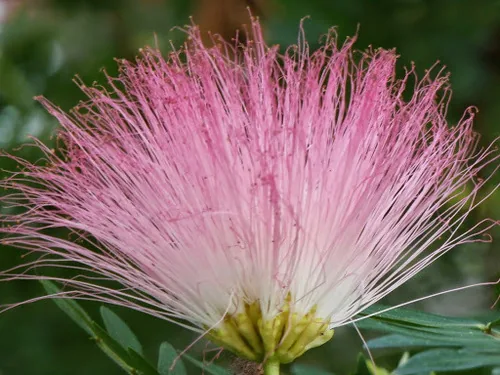
Powderpuff mimosa (Calliandra surinamensis) is a tropical to frost-free subtropical shrub native to South America, widely planted for spherical pink inflorescences like makeup puffs. Ferny compound leaves close at night; flowers attract hummingbirds and large bees in warm months. It brings legume nitrogen fixation and high drama color to frost-free food forests without confusing it with creeping Mimosa groundcovers. Full sun for densest bloom; leggy shade growth is mostly sticks. Rich, well-drained soils with steady moisture in the warm season and a dry season in true tropical climates produce best form. Protect from hard freezes; container culture allows winter shelter in marginal zones. Sow scarified seed in warm soil; semi-hardwood cuttings under mist root reliably. Prune after bloom waves to keep shrubs compact; wear gloves—stems can irritate sensitive skin. Not a primary food shrub; occasional traditional uses exist—verify safety. Cut long-stemmed flowers for tropical arrangements early morning; deadhead lightly to encourage repeat bloom where climate allows.
Permaculture Functions
- Nitrogen Fixer: Calliandra surinamensis roots nodulate with rhizobia that leak nitrogen to neighboring understory on well-drained tropical beds -- prune spent spherical heads to force repeat bloom without letting shrubs lignify into rangy sticks.
- Ornamental: Magenta stamen balls on ferny bipinnate foliage read as high-drama tropical hedges -- night-folding leaflets add motion beside static broadleaf screens.
- Pollinator: Long red filaments fit hummingbird bills and large carpenter bees during steamy months when many temperate ornamentals pause -- pair with ixora for staggered warm-season nectar density.
- Wildlife Attractor: Dense twigging shelters small passerines from raptors along frost-free fencelines -- still check regional invasive lists before mass planting near conservation land because seed rain travels.
Companion Planting
- Frost sensitivity — dies back to ground or entirely in cold snaps without protection
- Invasive potential — confirm local guidance before planting near natural areas in frost-free regions
Threats & Pressure
- Banded Cucumber Beetle
- Bean Aphid
- Bean Leaf Beetle
- Bean Weevil
- Corn Earworm
- Cowpea Curculio
- Fall Armyworm
- Kudzu Bug
- Locust Borer
- Locust Leaf Miner
- Lubber Grasshopper
- Pea Moth
- Pea Weevil
- Reniform Nematode
- Root Aphid
- Scale Insects
- Soybean Looper
- Spittlebugs
- Stink Bug
- Striped Cucumber Beetle
- Whiteflies
- Spotted Cucumber Beetle
- Brown Marmorated Stink Bug
- Harlequin Ladybird
- Velvetbean Caterpillar