About
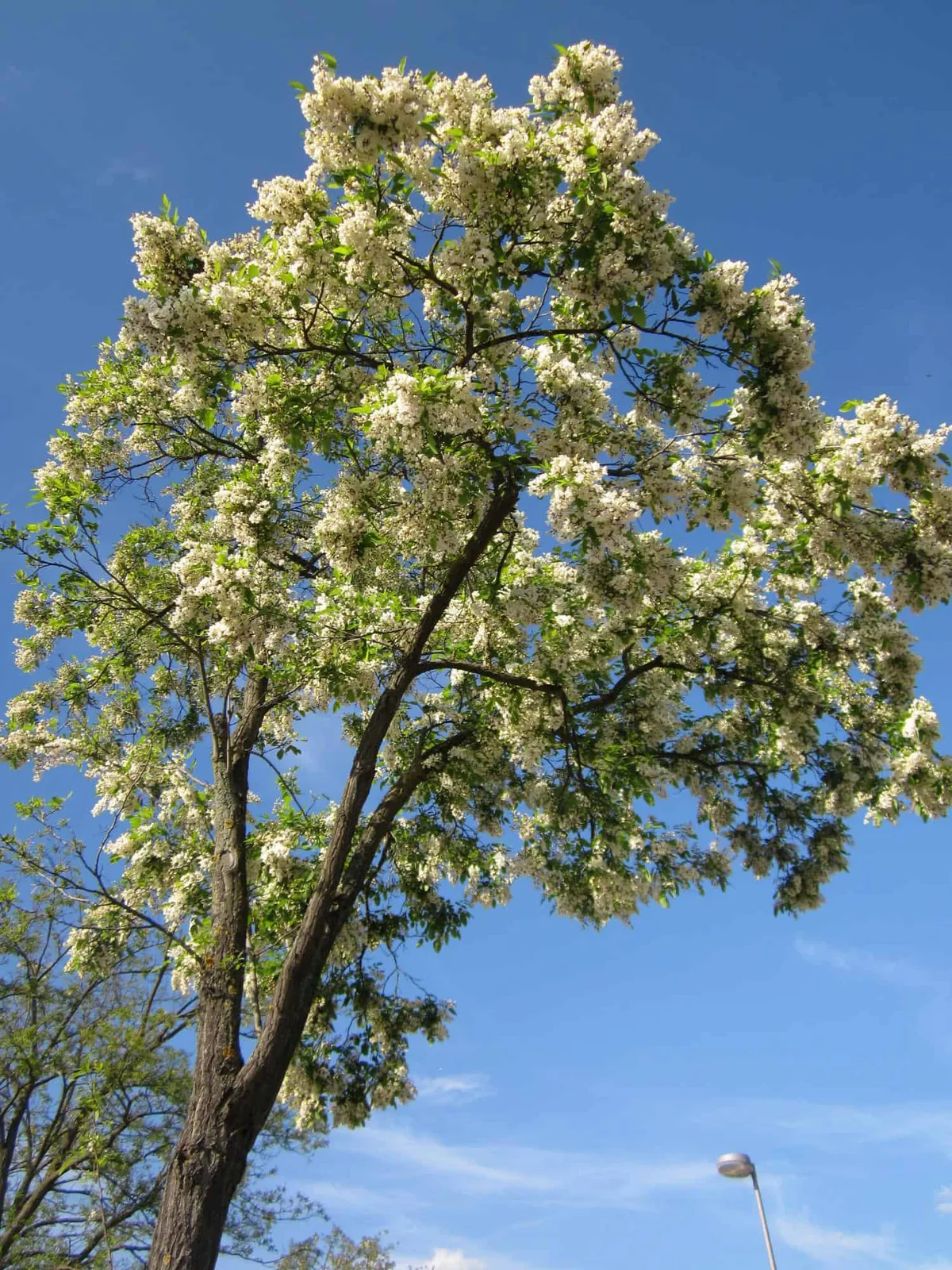
Black Locust (Robinia pseudoacacia) is a fast-growing deciduous tree native to North America, reaching 30-50 feet (9-15 m) tall with a spread of 20-35 feet (6-10 m). It features pinnate leaves with 7-19 leaflets and produces fragrant white to pale pink flowers in late spring that attract bees and other pollinators. Thrives in full sun; tolerates a wide range of soils, including poor, dry, and clay soils. Drought-tolerant once established. Typically achieved through root suckers or seeds. Durable, rot-resistant wood can be harvested when the tree reaches maturity, often within 10-15 years.
Permaculture Functions
- Nitrogen Fixer: Robinia pseudoacacia nodulates with rhizobia that pull atmospheric N into woody tissue and leaf fall -- interplant rows of fruit or cane berries in the leaf-drop zone to catch that pulse without expecting bean-field rates from the canopy.
- Pollinator: Hanging racemes of white pea-flowers drip nectar in late spring when many early fruit trees are already past bloom -- strong honey flows show up in beekeeper records wherever locust runs as a hedgerow dominant.
- Erosion Control: Aggressive suckering roots knit mine spoil, road cuts, and old field edges where topsoil was scraped -- pair with mowing strips on the garden side so runners do not swallow your paths.
- Animal Fodder: Ruminants browse young leaves in controlled strips; horses mishandle bark and seeds because of robinin toxicity -- strip barked prunings from pasture fence lines before curious animals strip them for you.
- Windbreaker: Fast straight poles reach forty to eighty feet in a decade on poor sites -- slowing desiccating wind across poultry yards and tunnel houses while still letting winter light through after leaf drop.
- Border Plant: Thornless cultivars mark property lines with post-grade rot-resistant wood from thinned stems -- keep coppice cycles short where neighbors worry about brittle deadwood overhanging shared fences.
Companion Planting
Good Neighbors
Also mentioned as companions:
- Clover
- Black Walnut
Not yet profiled in PermiePortal
Cautions
- None specified
Threats & Pressure
🐛 Pests
- Banded Cucumber Beetle
- Bean Aphid
- Bean Leaf Beetle
- Bean Weevil
- Corn Earworm
- Cowpea Curculio
- Fall Armyworm
- Kudzu Bug
- Locust Borer
- Locust Leaf Miner
- Lubber Grasshopper
- Pea Moth
- Pea Weevil
- Reniform Nematode
- Root Aphid
- Soybean Looper
- Spittlebugs
- Stink Bug
- Striped Cucumber Beetle
- Twig Girdlers
- Spotted Cucumber Beetle
- Brown Marmorated Stink Bug
- Harlequin Ladybird
- Velvetbean Caterpillar