About
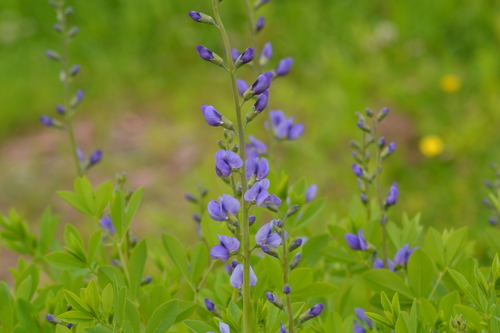
Blue wild indigo (Baptisia australis) is a long-lived herbaceous legume of eastern and central North American prairies and open woods, forming shrub-like clumps of blue-green trifoliate leaves with tall spikes of indigo-blue pea flowers followed by black inflated pods. Mature clumps reach 3–4 feet (0.9–1.2 m) tall and wider with age, with deep taproots that resent transplanting drama. In permaculture it is a durable nitrogen contributor and pollinator mast for cool-temperate borders where you can leave a plant alone for years. ☀️💧 Sun and Water Requirements: Full sun for strongest bloom and nodulation; light shade reduces flowering. Tolerates drought once established thanks to deep roots; prefers well-drained soils and sulks in waterlogged clay. Avoid over-fertilization—legumes already negotiate nitrogen with bacteria. ✂️ Propagation: Sow scarified seed in spring; seedlings take several years to reach full glory. Divide only young clumps with minimal root disturbance; large divisions sulk. Soft tip cuttings are possible for rare clones but seed is simpler for species plantings. 🌾 Harvest / Best Use Timing: Leave flowers for pollinators; pods rattle decoratively in fall and hold seed for collection if you breed lines. Cut back dead stems late winter before new growth; fresh spring shoots emerge from crowns like clockwork when soil warms.
Permaculture Functions
- Nitrogen Fixer: Root nodules partner with rhizobia to enrich surrounding soil over years.
- Pollinator: Bumblebees especially work the pea flowers during cool spring weather.
- Ornamental: Blue spikes beat short-lived annual color stunts in perennial borders.
- Border Plant: Clumps define bed edges without flopping if sited with enough sun.
- Dynamic Accumulator: Deep roots pull minerals into biomass that recycles on leaf drop.
Practitioner Notes
- First years look like a mistake—patience is the actual input, not more fertilizer.
- Seed pods are nature’s maracas; collect before they eject seed into neighbor beds if that matters.
- Baptisia hybrids abound; species seed gives honest local genetics for restoration.
- Weevils sometimes drill pods—inspect before saving seed you intend to trade.
Companion Planting
- Pale Purple Coneflower — overlapping bloom supports shared pollinator traffic in prairie mixes
- Little Bluestem — warm-season grass contrasts fine foliage with baptisia’s bold structure
- Yarrow — low forb fills gaps while baptisia clumps mature slowly from seed
- Transplanting large clumps — taproot sulk can stall growth for multiple seasons
Pest Pressure