About
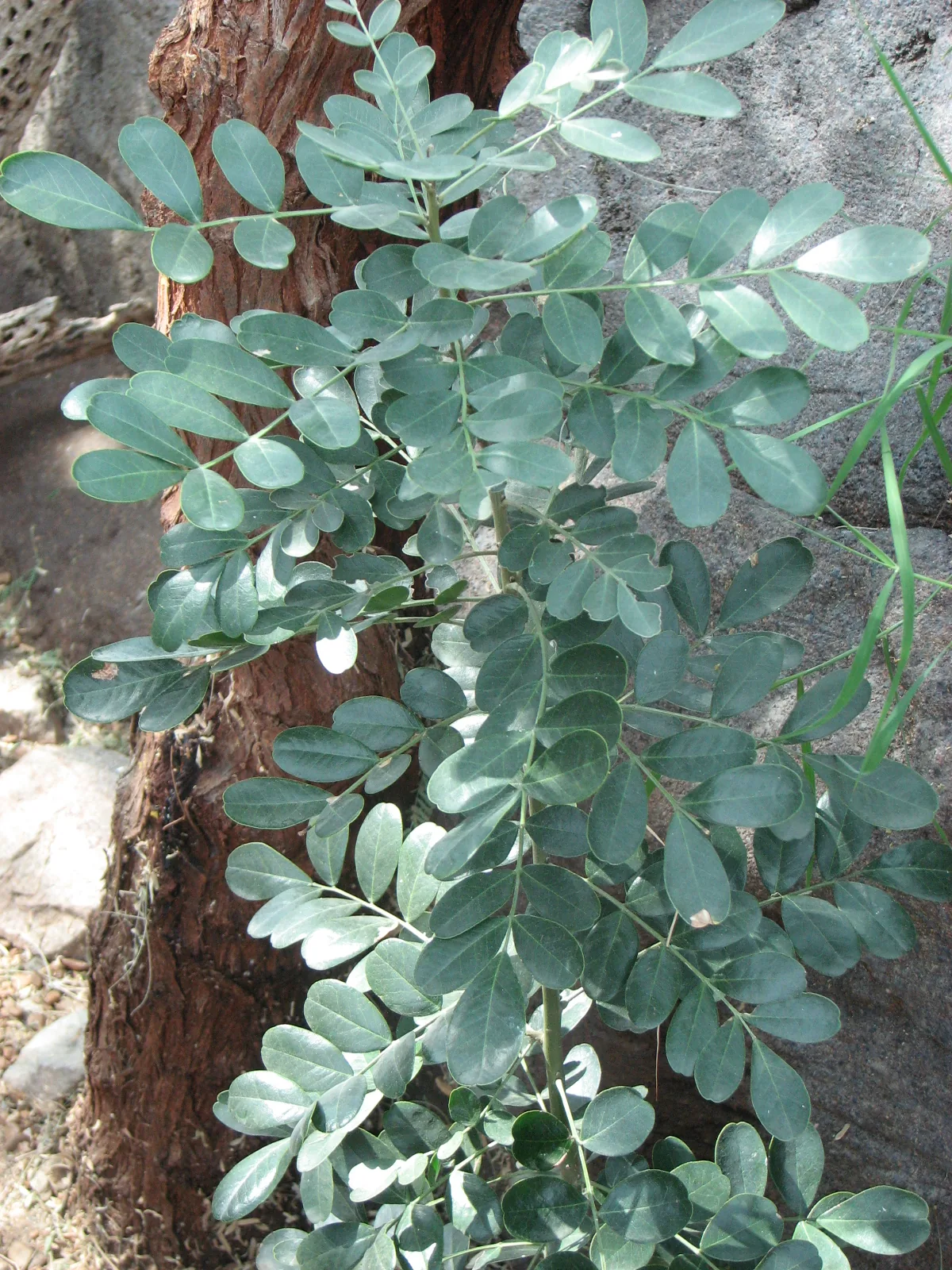
Desert ironwood (*Olneya tesota*) is a slow-growing, extremely long-lived leguminous tree of the Sonoran Desert, valued for rock-hard timber, dense shade, and wildlife habitat. In cultivation it forms a rounded, often multi-trunk canopy with tiny gray-green leaves and showy pink-purple pea flowers. Mature trees commonly reach 20–30 feet tall and wide, with some specimens much larger given deep soil and time. Plant in full sun on very well-drained, lean mineral soil. Ironwood tolerates brutal heat and months without rain once established; it sulks in soggy ground. In Florida and Puerto Rico, treat it like a specialty arid canopy tree—excellent drainage, no lawn over the roots, and careful watering only to establish. Seeds: Scarify or soak seed in hot water, then sow in a fast-draining mix at warm temperatures; germination can be slow and irregular. Transplants: Container-grown specimens establish best; move young trees during the warm season and protect from root disturbance. Pods mature dry on the tree; collect before heavy rains if saving seed. Wood harvest (where legal and ethical) is a decades-scale decision—this species is a desert elder, not a quick coppice. For permaculture, the best "crop" is shade, mulch from leaf drop, and nitrogen-rich leaf litter over decades.
Permaculture Functions
- Nitrogen Fixer: Olneya tesota nodulates like other desert legumes -- leaf litter adds biologically captured nitrogen to gravelly soils over decades, not single-season cover-crop rates.
- Wildlife Attractor: Pink-purple pea flowers feed bees -- evergreen canopy shelters birds, lizards, and insects through Sonoran heat.
- Shade Provider: Dense gray-green foliage cools understory succulents and people in exposed yards -- once the slow canopy builds.
- Windbreaker: Hard, wind-resistant wood and compact crowns cut desiccating flow -- across beds and poultry yards on ridge sites.
- Erosion Control: Deep lateral and tap roots anchor rocky slopes and desert washes -- where soil is thin.
- Mulcher: Fine compound leaflets drop a mineral-rich duff -- shields soil from sun and monsoon splash under desert canopy.
Companion Planting
Threats & Pressure
- Banded Cucumber Beetle
- Bean Aphid
- Bean Leaf Beetle
- Bean Weevil
- Borers
- Corn Earworm
- Cowpea Curculio
- Fall Armyworm
- Kudzu Bug
- Locust Borer
- Locust Leaf Miner
- Lubber Grasshopper
- Pea Moth
- Pea Weevil
- Reniform Nematode
- Root Aphid
- Scale Insects
- Soybean Looper
- Spittlebugs
- Stink Bug
- Striped Cucumber Beetle
- Spotted Cucumber Beetle
- Brown Marmorated Stink Bug
- Harlequin Ladybird
- Velvetbean Caterpillar