About
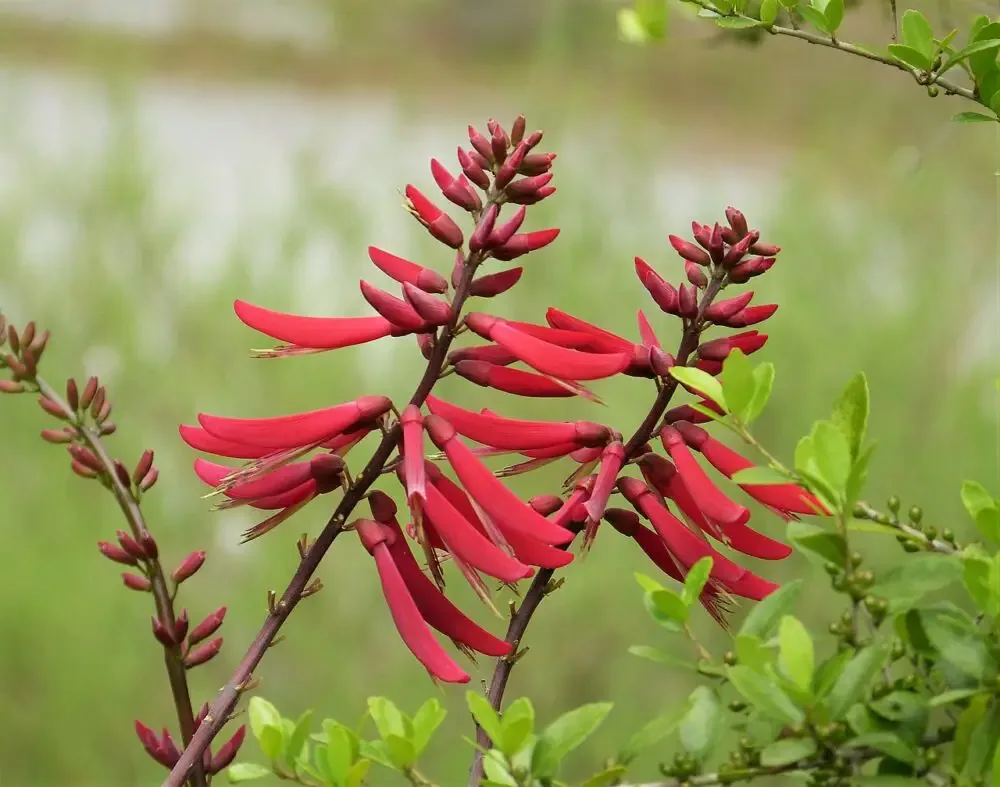
Coral Bean (*Erythrina herbacea*) is a deciduous to evergreen shrub native to the southeastern United States. It typically grows between 0.9 to 6 meters (3 to 20 feet) tall, featuring thorny stems and trifoliate leaves with arrowhead-shaped leaflets. The plant produces striking scarlet tubular flowers arranged in elongated clusters, which bloom from spring to early summer and are highly attractive to hummingbirds and butterflies. Following the flowering period, it develops seed pods containing bright red seeds. Coral Bean thrives in sandy, well-drained soils and is commonly found in open woodlands, coastal hammocks, and disturbed areas. Seeds: Collect seeds from mature pods and plant them in well-draining soil. Scarification or soaking may improve germination rates. Cuttings: Semi-hardwood cuttings can be taken during the growing season and rooted in a moist, well-draining medium. Sun: Prefers full sun to partial shade. Water: Drought-tolerant once established but benefits from regular watering during prolonged dry periods. Seeds: Harvest mature seed pods in late summer to early fall when they turn brown and begin to split open.
Permaculture Functions
- Edible: Bright red tubular flowers enter some Central American soups and egg dishes as a seasonal flavor note -- seeds and roots stay highly toxic and belong off the plate.
- Medicinal: Bark and leaf decoctions appear in southeastern Indigenous materia medica -- for bowel pain and rheumatism under trained harvest protocols only.
- Wildlife Attractor: Scarlet spikes are hummingbird magnets -- native caterpillars chew foliage you budget for habitat, not perfection.
- Erosion Control: Woody crown and spreading roots anchor pine savanna sand cuts, coastal hammocks, and road embankments -- where hurricanes scour lighter plants.
- Border Plant: Thorny stems and bold flowers mark fencelines and woodland edges as living barbed wire -- that still photographs well.
Companion Planting
No companion data yet.
Also mentioned as companions:
- Pine
- Oak
- Magnolia
Not yet profiled in PermiePortal
Threats & Pressure
- Aphids
- Banded Cucumber Beetle
- Bean Aphid
- Bean Leaf Beetle
- Bean Weevil
- Corn Earworm
- Cowpea Curculio
- Fall Armyworm
- Kudzu Bug
- Locust Borer
- Locust Leaf Miner
- Lubber Grasshopper
- Pea Moth
- Pea Weevil
- Reniform Nematode
- Root Aphid
- Soybean Looper
- Spider Mites
- Spittlebugs
- Stink Bug
- Striped Cucumber Beetle
- Spotted Cucumber Beetle
- Brown Marmorated Stink Bug
- Harlequin Ladybird
- Velvetbean Caterpillar