About
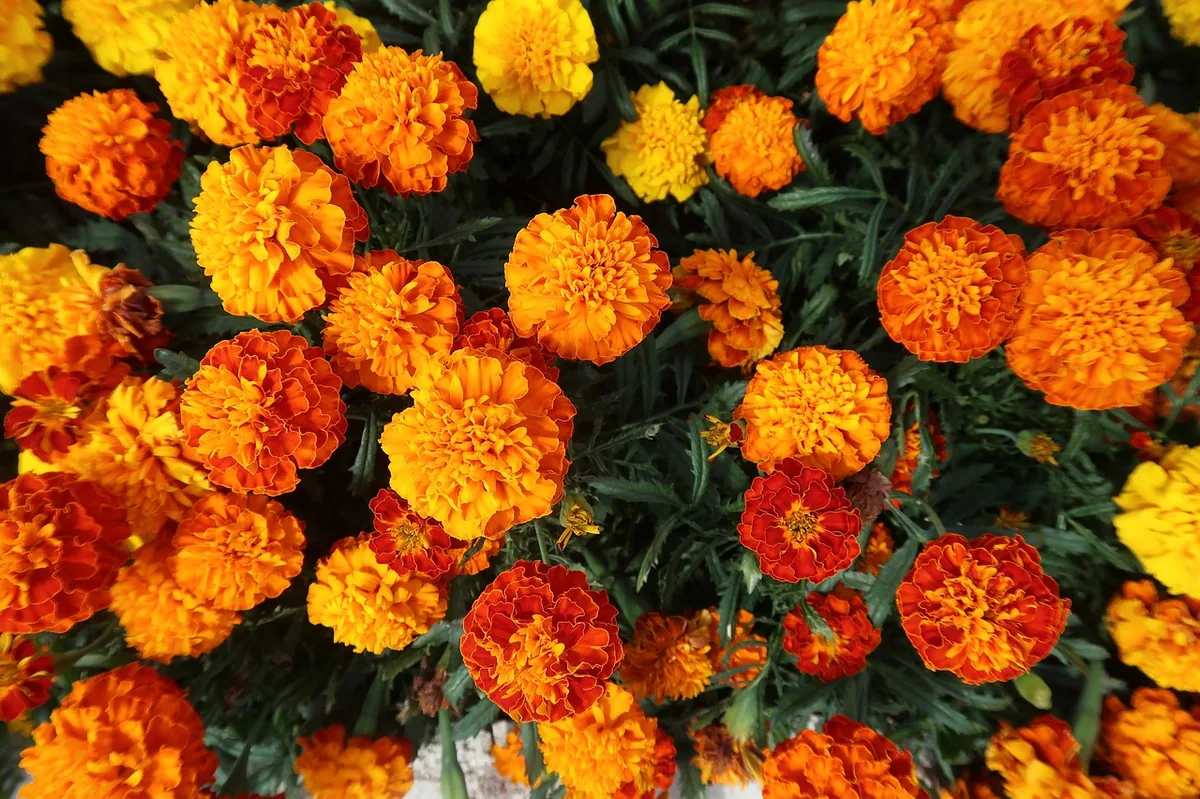
Marigold (Tagetes spp.) is a hardy, fast-growing flowering plant known for its bright yellow, orange, and red blossoms. It is commonly used in gardens for pest control and soil improvement. Marigolds are easy to grow, requiring minimal maintenance, and they bloom profusely throughout the growing season. The plant is particularly valued in companion planting, as it helps repel nematodes, aphids, and other garden pests. It thrives in garden beds, borders, and containers, adding vibrant color while also benefiting the surrounding plants. Prefers full sun but can tolerate partial shade. Requires well-drained soil; thrives in loamy or sandy soil. Moderate watering needs; avoid overwatering to prevent root rot. Seeds: Easily grown from seeds; sow directly in soil after the last frost. Transplants: Can be started indoors and transplanted once seedlings are established. Cuttings: Some varieties can be propagated from cuttings. Flowers can be harvested once fully bloomed for medicinal or ornamental uses. Regular deadheading promotes continuous blooming. Collect seeds from dried flower heads at the end of the growing season for future planting.
Permaculture Functions
- Edible: Tagetes lucida ‘Mexican mint marigold’ leaves go in pozole and tea with anise-tarragon flavor; ornamental French and African types are not dessert -- petals of patula/erecta are occasional garnish only after pesticide-free confirmation.
- Medicinal: Leaf washes show thiophene and essential-oil activity in lab plates -- field nematode suppression is strongest when roots of patula grow through tomato row soil for a full season, not from one transplant waved nearby.
- Pollinator: Single-flowered cultivars feed small bees on short tongues -- dense pompon doubles are eye candy with little usable nectar unless you seek cultivar trials yourself.
- Wildlife Attractor: Hoverflies and parasitic wasps work flat yellow platforms for nectar -- while hunting aphids on neighboring brassica leaves in late summer.
- Pest Management: Interplanted rows reduce root-knot nematode counts in sandy vegetable soils when marigold roots occupy the bed all season -- effect is species- and timing-specific, not a sticker on the pot.
- Border Plant: Twelve-inch French types edge tomato beds with color coding for succession sow dates -- tall African types back-stop corn rows as visible bee billboards.
- Water Purification: Tagetes roots take up soluble lead and zinc in contaminated-soil trials used for science, not kitchen confidence -- useful language for brownfield phytostabilization designs, not drinking-water magic.
Field Observations
- No field observations yet
Companion Planting
Threats & Pressure