About
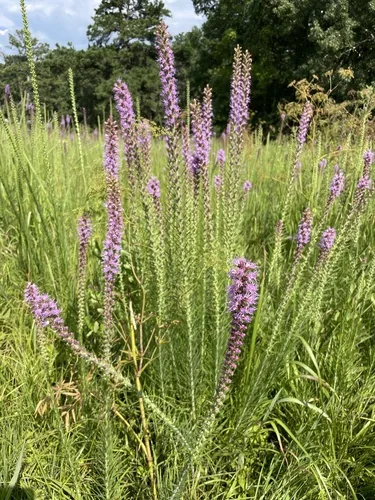
Prairie blazingstar (Liatris pycnostachya) is a tall meadow perennial of central North American prairies and moist low ground, carrying dense spikes of purple florets that open top-down along stems reaching 3–5 feet (0.9–1.5 m). Narrow leaves line the stalks, and fibrous roots anchor plants in loamy soils that swing between moist spring and summer dry downs. It is a staple in pollinator mixes, rain-garden backs, and any sunny border that wants vertical color without shrub bulk. Full sun for stiff stems and dense flower spikes; shade causes leaning apologies. Moist, well-drained soils suit it best; tolerates average garden beds if watered during drought. Mulch to keep roots cool; avoid stagnant water over crowns in humid heat. Sow seed with cold-moist stratification or direct-sow in fall. Divide clumps in early spring before growth surges. Cut old stems in late winter if tidy gardens matter; otherwise leave for insect nesting. Cut flowering stems for dried arrangements when color holds along most of the spike. Leave some heads for goldfinches and structural winter interest. Bloom peaks track mid-to-late warm season heat and daylength, not a single holiday.
Permaculture Functions
- Pollinator: Liatris pycnostachya florets open top-down on dense spikes, offering deep nectar tubes to bumble workers and monarchs during late-summer dearth -- blooms after many early prairie forbs finish, extending insect calories.
- Wildlife Attractor: Feathery achenes feed goldfinches and sparrows; hollow standing stalks house small overwintering bees if you delay mowing until spring thaw -- trade tidy parking strips for honest insect hotel architecture.
- Ornamental: 3–5 ft purple candles rise between switchgrass and little bluestem without shrub bulk -- moist-site ecotype stays stiffer than sandhill blazingstars, so use in rain-garden backs, not xeric rock only.
- Erosion Control: Fibrous corms and roots anchor loamy swales where sheet flow would otherwise strip seed -- mulch crowns lightly to keep summer heat from desiccating bases in humid heat waves.
Companion Planting
- Wet clay without percolation — crown rot during warm humid spells
- Dry shade — thin spikes and existential flopping
Threats & Pressure