About
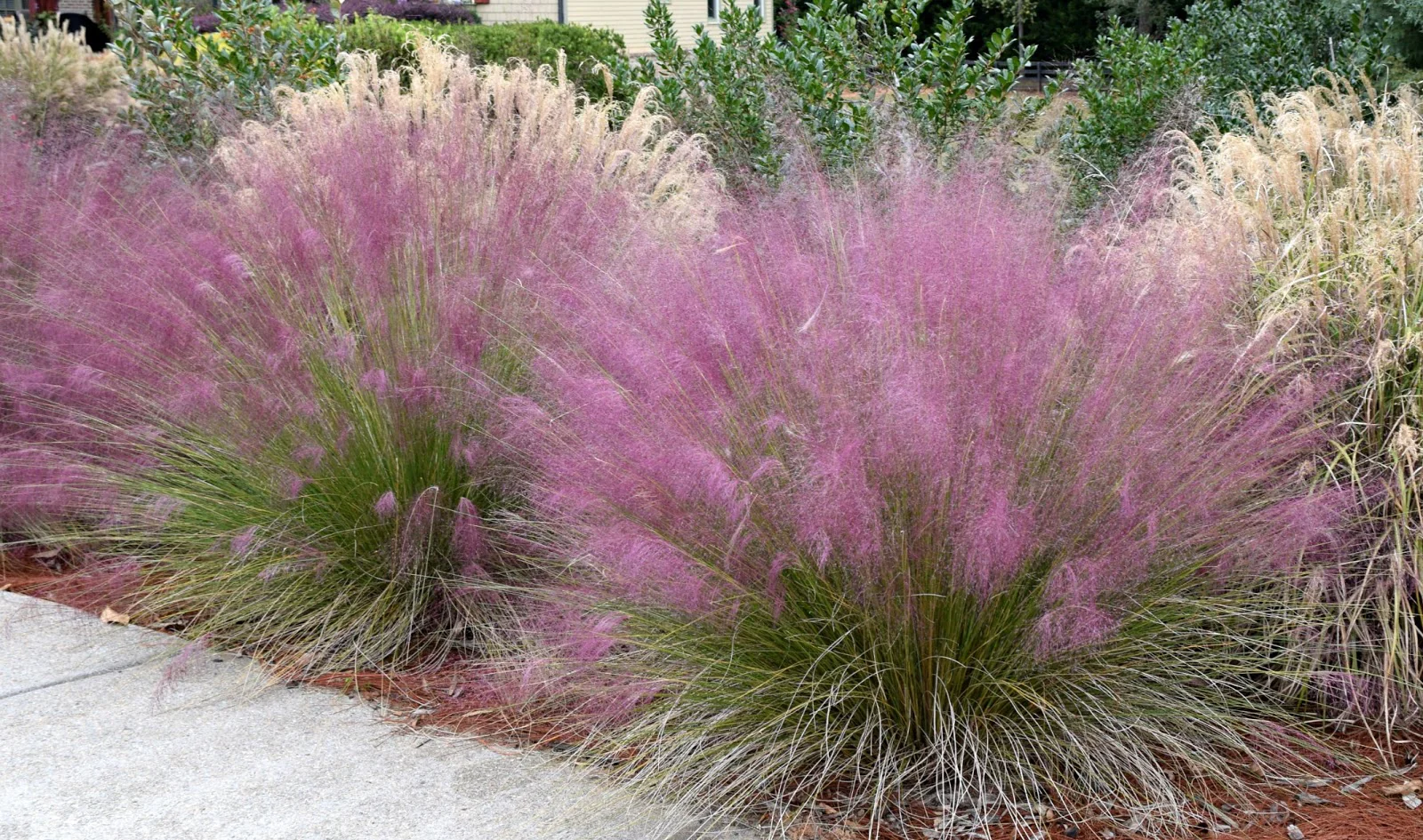
Muhly Grass is a clump-forming perennial grass native to North America, reaching heights of 0.9 to 1.2 meters (3 to 4 feet) and widths of about 0.9 meters (3 feet). It is renowned for its airy, pink to purple flower plumes that emerge in the fall, creating a striking visual display. The slender, dark green foliage remains attractive throughout the year, providing texture and movement in the landscape. Muhly Grass thrives in full sun and is adaptable to a variety of soil types, including sandy and rocky soils, as long as they are well-drained. It is drought-tolerant once established and requires minimal maintenance. ✂️🫘 Methods to Propagate: - **Division:** In early spring, divide established clumps by separating the root mass into smaller sections and replanting them. - **Seeds:** Sow seeds in late fall or early spring directly into the soil or start indoors and transplant seedlings after the last frost. 🌞💧 Sun and Water Requirements: - **Sun:** Prefers full sun exposure (at least 6 hours of direct sunlight daily) for optimal flowering and growth. - **Water:** Requires moderate watering; water regularly until established, then reduce frequency. Tolerates drought conditions but benefits from occasional watering during prolonged dry periods. 🧑🌾👩🌾 When to Harvest: - **Seeds:** Collect seeds in late fall when the flower plumes have matured and turned brown. Cut the seed heads and allow them to dry before extracting the seeds.
Permaculture Functions
- **Ornamental: ** Adds aesthetic value to landscapes with its vibrant fall blooms and graceful foliage.
- **Erosion Control: ** The dense root system helps stabilize soil, making it useful for preventing erosion on slopes and embankments.
- **Wildlife Attractor: ** Provides habitat and shelter for various wildlife species, including birds and beneficial insects.
Practitioner Notes
- Pink plumes need sun—shade grows green floppy hair, not cotton-candy clouds.
- Cut back late winter before new growth—summer shearing removes bloom stems.
- Drought-tolerant once rooted—first summer still wants weekly soak.
Companion Planting
- Coneflower
- Black-eyed Susan
- Aster
Pest Pressure