About
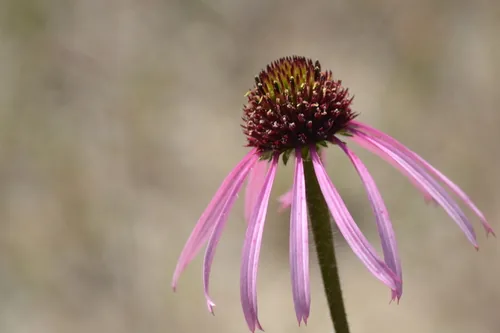
Pale purple coneflower (Echinacea pallida) is a taprooted prairie perennial with slender drooping ray petals around a spiny central cone, flowering earlier than many garden hybrids and feeding specialist bees adapted to its architecture. Plants reach 2–3 feet (60–90 cm), with narrow rough leaves and deep roots that scoff at short droughts once established. In restoration and permaculture borders it anchors dry-mesic strips, attracts long-tongued pollinators, and supplies roots for careful medicinal use where regulations and ethics align. Full sun for strongest stems and upright cones; too much shade causes flopping apologies. Well-drained, lean to average soils mimic prairie truth; wet clay rots taproots. Water deeply during establishment, then back off—pampered plants invite lodging. Sow seed outdoors in fall for cold stratification or stratify 6–8 weeks moist-cold before spring sowing. Divide carefully; taproots resent rough handling—prefer fresh seed for large plantings. Deadhead if you dislike self-sowing volunteers. For medicine, roots are dug after several years of growth in fall or early spring per sustainable rotation—never strip wild stands. Flowers can be collected at full bloom for teas; seeds mature for birds if heads remain. Peak bloom leads many warm-season composites, filling the early pollinator gap.
Permaculture Functions
- Pollinator: Echinacea pallida disk florets form a narrow tube that rewards long-tongued bumble queens and specialist bees while ignoring double-flowered garden mutants with no pollen -- blooms earlier than many E. purpurea hybrids, extending prairie sequence.
- Medicinal: Taproot-rich preparations supply alkamide and polysaccharide fractions used in licensed immune formulas where harvest is legal and sustainable -- wild digging is unethical; grow dedicated rows from nursery seed of documented origin.
- Wildlife Attractor: Spiny cones mature into goldfinch and siskin buffets while stiff stems house small overwintering bees if you mow late -- leave seed heads until March unless HOA aesthetics override ecology.
- Ornamental: Drooping pale ray petals around coppery cones read as “wild elegance” on gravel berms and dry-mesic reconstructions -- taprooted habit refuses pampered irrigation schedules that make hybrids flop.
Companion Planting
- Overwatering and rich fertility — lanky stems that lodge after the first thunderstorm
- Do not dig threatened wild populations—buy nursery seed of documented origin
Threats & Pressure