About
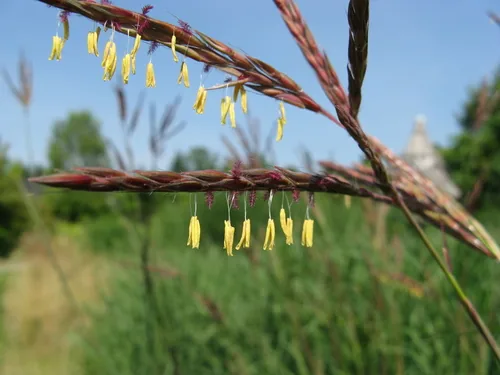
Big bluestem (Andropogon gerardii) is a warm-season bunchgrass of North American tallgrass prairie, forming tall clumps with blue-green spring blades that shift copper-red in autumn and seed heads shaped like a turkey’s foot. Culms commonly reach 4–8 feet (1.2–2.4 m) in favorable moisture, shorter on dry ridges. It is a backbone species for prairie restoration, pasture diversification, and ornamental meadows that refuse to pretend Kentucky bluegrass is native. Full sun for strongest growth and flowering; shade weakens stems. Tolerates drought and lean soils once deep roots develop; responds to occasional summer rain or irrigation with rapid regrowth. Avoid chronic wet, compacted sites that favor cool-season weeds over warm-season roots. Sow fresh or cold-stratified seed in late spring when soil warms; establishment is slow the first year, explosive the next. Divide dormant crowns in early spring for landscape plugs. Use local ecotype seed when restoring genetics matched to rainfall and daylength. For hay or silage, cut during early boot to early bloom for quality; leave standing through winter for wildlife cover if forage is not the priority. Burn or mow on restoration schedules appropriate to your region and regulations—not random weekend boredom.
Permaculture Functions
- Animal Fodder: Andropogon gerardii hay cut at early boot holds protein better than late lignified turkeyfoot stems -- rotational grazing beats continuous nibble if you want stand persistence on restored prairie.
- Biomass: Deep C4 roots deposit carbon while tall culms give carbon-heavy mulch after winter burning schedules -- first-year plants sleep; third-year leaps surprise people who skip patience.
- Erosion Control: Fibrous bunching roots grip highway cuts and pipeline ROWs where cool-season turf fails -- pair with little bluestem for texture bands, not monoculture boredom.
- Wildlife Attractor: Turkeyfoot seeds feed bobwhite and sparrows while hollow stems shelter native bees if you delay mowing until April warmth -- standing brown winter stems are habitat, not mess, on honest sites.
- Ornamental: Copper-red fall color and 2 m culms sell designed meadows -- chlorosis on high-pH fill means choose local ecotype or accept yellow drama, not more fertilizer noise.
Companion Planting
- Heavy nitrogen + frequent mowing — favors weedier competitors and can thin bluestem stands over time
Threats & Pressure