About
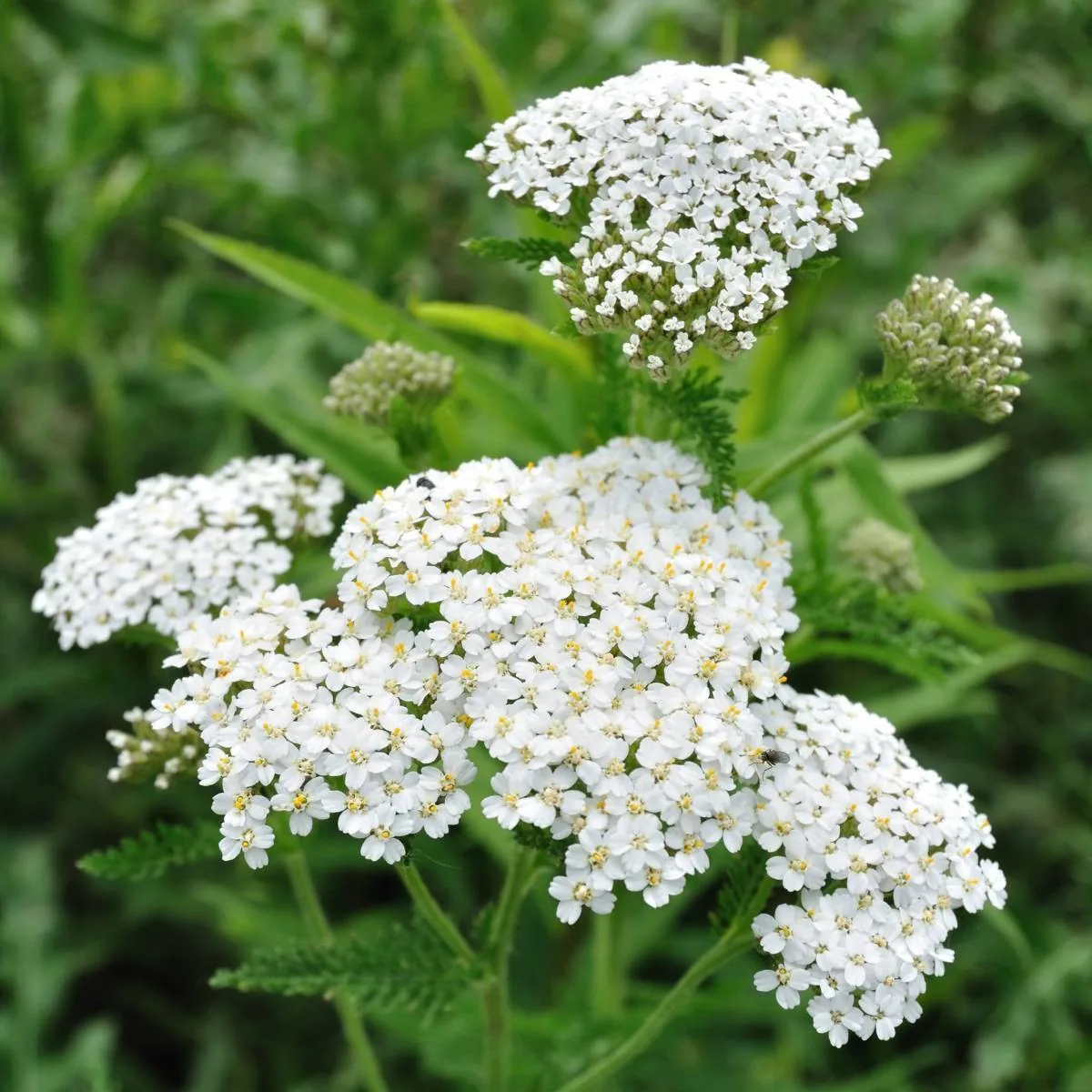
Yarrow is a hardy perennial herb that grows up to 0.6–1 m (2–3 feet) tall. It features feathery, aromatic, finely divided leaves and small white, yellow, pink, or red flowers arranged in flat-topped clusters. Yarrow is drought-tolerant and thrives in poor, dry soils, making it an excellent low-maintenance plant for permaculture designs. The plant spreads through underground rhizomes and self-seeding, forming dense patches over time. It is well known for its role in attracting beneficial insects and acting as a living mulch. Prefers full sun (6+ hours of sunlight). Requires well-drained soil, tolerates sandy and rocky conditions. Drought-resistant but benefits from occasional watering in dry climates. Seeds: Sow directly in the garden in early spring or fall. Division: Separate clumps in spring or fall. Cuttings: Root softwood cuttings in water or soil. Flowers and leaves can be harvested anytime during the growing season, but are most potent when flowers first bloom. Dry leaves and flowers for long-term storage.
Permaculture Functions
- Medicinal: Bitter leaf and flowering tops are traditional for fever tea and styptic field packs on clean scrapes -- concentrated volatile oil raises concerns for heavy long-term internal use; pregnancy lists often flag yarrow.
- Pollinator: Flat white corymbs give easy landing pads for parasitic wasps, tachinid flies, -- and small bees that cannot work deep tubular mint flowers in the same guild.
- Wildlife Attractor: Dried umbels hold structure through winter so predatory ground beetles hide under matted stems -- until spring thaw wakes aphid pressure in adjacent beds.
- Mulcher: Repeated mowing or scything of spreading patches yields fine green hay that heats a compost core in three days -- when mixed with kitchen scraps.
- Dynamic Accumulator: Rhizomatous roots pull copper -- and zinc signatures into leaf ash compared with adjacent turf in university garden trials used for mineral teas on fruiting shrubs.
- Erosion Control: Fibrous mat grips road-cuts -- and orchard terraces where shallow soil would slip; divide every few years so center does not die out and leave a bare donut.
- Border Plant: Low white cultivars edge gravel paths reflecting heat; taller pink forms mark transitions between meadow zones -- and vegetable geometry without formal hedging.
- Water Purification: Rhizome mass is planted in rain-garden bottoms -- and gravel reed beds to slow sheet flow, trap sediment, and uptake dissolved nutrients before water leaves the site.
Threats & Pressure