About
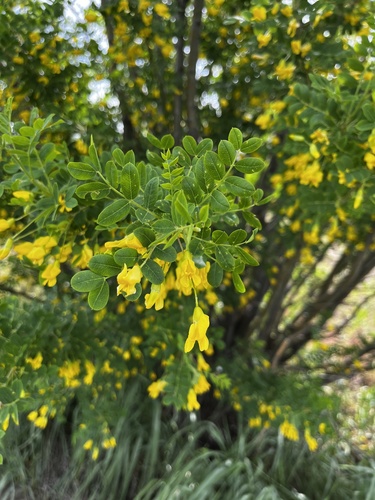
Siberian peashrub is the overachieving legume hedge from cold steppes that laughs at winters your citrus pretends not to hear about. Fine leaves, yellow pea flowers, small pods edible in moderation when young (do your homework—moderation is the keyword). In subtropical and tropical Americas it grows as a tough, drought-tolerant shrub or small tree—useful windbreak biomass, not a tropical eye candy plant. ☀️💧 Sun and Water Requirements: - Full sun for dense growth and best flowering. - Tolerates poor and alkaline soils; drought-tolerant once established—do not drown it in lawn irrigation guilt. ✂️ Methods to Propagate: - Seeds: scarify and soak; direct sow or start in deep pots—taproot does not love cramped trays. - Hardwood cuttings possible but seeds are the usual route for volume. 🌾 Harvest notes: - Young pods and seeds are used cautiously in survival/forage contexts—verify preparation and portion with reliable references.
Permaculture Functions
- Nitrogen Fixer: Feeds the guild while pretending to be “just a hedge.”
- Animal Fodder: Browse and pods for poultry and livestock in integrated systems—again, moderation and ID matter.
- Windbreaker: Fine-textured hedge rows for poultry runs and field edges.
- Wildlife Attractor: Flowers for pollinators; cover for small birds at the edge of systems.
- Erosion Control: Deep roots on slopes and disturbed ground.
Practitioner Notes
- Chop-and-drop timing matters: green mulch feeds soil; woody brown mulch ties up surface nitrogen briefly.
- Soil smell and root color tell more than gadget overload—dig a small hole twice a season.
- Inoculate with the correct rhizobia group—wrong packet gives pretty leaves and empty nodules.
- Sharp tools and clean cuts beat torn stems; disease spores love frayed tissue more than rhetoric.
Companion Planting
- Elderberry
- Seaberry
- Apple
- Deep shade that turns it sparse and whiny
- Wet feet in compacted clay sumps
Pest Pressure