About
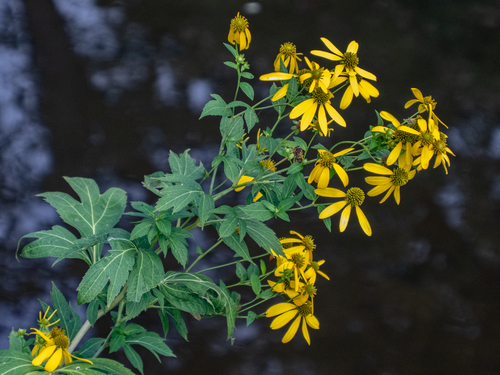
Green-headed coneflower (Rudbeckia laciniata) is a tall perennial of moist meadows, streambanks, and woodland openings in eastern and central North America, bearing bright yellow ray flowers around a prominent greenish central cone. Plants can reach 5–10 feet (1.5–3 m) in rich wet soils with a bold presence. It is a pollinator tower for rain gardens and naturalistic plantings where height is an asset, not a zoning violation. ☀️💧 Sun and Water Requirements: Full sun to light shade; afternoon shade helps in hottest humid summers. Moist, fertile, organic soils produce the largest plants; tolerates average garden beds with irrigation. Avoid baking dry berms unless you enjoy watching giants sulk. ✂️ Propagation: Sow seed outdoors with winter chill or start indoors before last frost. Divide large clumps in spring; replant pieces with steady moisture. Staking may be needed in windy sites on rich soils—thin stems early if lodging is chronic. 🌾 Harvest / Best Use Timing: Cut long stems for bouquets at early bloom; flowers persist and age attractively. Leave late heads for finches if winter interest matters. Cut back frost-killed stems in late winter to tidy without harming crowns.
Permaculture Functions
- Pollinator: Large composite heads attract diverse bees and butterflies in mid to late summer.
- Wildlife Attractor: Seeds feed birds; tall stems shelter beneficial insects if left standing.
- Ornamental: Vertical yellow accent in moist borders and pond edges.
- Biomass: Substantial seasonal growth returns organic matter when cut and composted responsibly.
Practitioner Notes
- Height surprises people who bought a four-inch pot—read the label’s vertical ambition.
- Goldfinches treat seed heads like vending machines—delay cleanup if you like bird TV.
- “Green cone” is the ID handshake—yellow petals are the distraction.
- Moisture lovers still drown in sealed pots—drainage holes are non-negotiable even in bog cosplay.
Companion Planting
- Great Blue Lobelia — complementary blue spikes at similar moisture levels for color contrast
- Switchgrass — structural grass matrix that supports tall forbs against wind
- Bee Balm — overlapping bloom window widens pollinator service if mildew is managed
- Aggressive spread in ideal moist rich beds — contain or edit runners where space is tight
- Flop on overfertilized soils — leaner soils often stand prouder