About
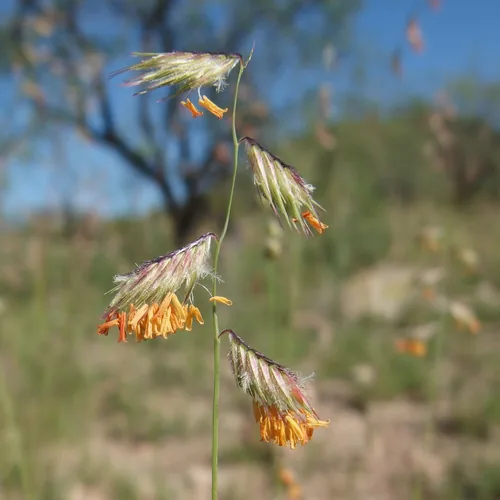
Sand grama (Bouteloua chondrosioides) is a warm-season bunchgrass of southwestern North American grasslands and desert grasslands, bearing comb-like inflorescences on wiry stems usually 1–2 feet (30–60 cm) tall. It thrives in sandy, well-drained soils with lean fertility and rewards growers who stop fertilizing like it is corn. Use it in xeric meadows, green roofs, and any border that wants fine texture without sprinkler entitlement. Full sun for flowering and drought resilience; shade yields sparse plants. Sandy, well-drained soils are ideal; tolerates alkaline conditions. Water deeply only to establish; prolonged irrigation invites weeds that outcompete lean-grass ethics. Sow seed in warm soil after frost risk. Divide small bunches in spring if needed. Cut back old growth in late winter for tidy designs. Collect seed when comb inflorescences dry—use for restoration mixes. Leave standing material for ground-feeding birds where aesthetics allow. Peak growth follows summer heat and monsoon moisture patterns.
Permaculture Functions
- Erosion Control: Bouteloua chondrosioides fibrous roots stitch terrace cuts and desert garden berms -- where monsoon runoff would otherwise groove bare sand.
- Ground Cover: Low bunch habit tiles between agaves and desert forbs -- without forming a thirsty turf monoculture.
- Wildlife Attractor: Comb seed heads feed ground-foraging birds -- while basal clumps shelter ants and spiders at soil level.
- Ornamental: Horizontal rat-tail inflorescences hover just above foliage -- for graphic motion in lean meadow plantings that refuse sprinkler guilt.
Companion Planting
- Heavy clay and wet feet — decline while you buy replacement toys
- Overfertilization — weeds win the beauty contest
Threats & Pressure