About
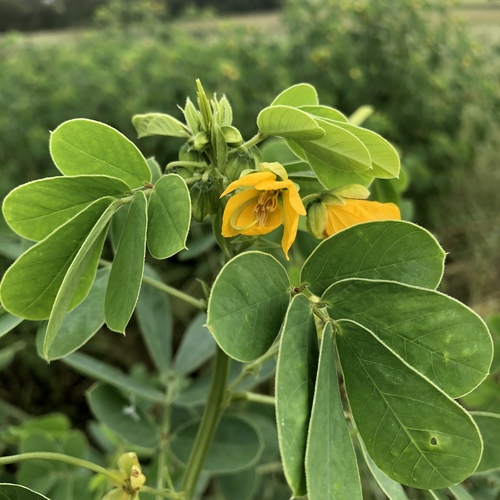
Coffeeweed (Senna occidentalis) is a fast-growing warm-season legume of disturbed tropical and subtropical sites worldwide, often seen along roads, pastures, and waste ground, reaching 3–6 feet (1–2 m) with pinnate leaves, yellow flowers, and flat pods. Seeds have been roasted as a coffee substitute in folklore—modern use is risky because toxicity varies and misidentification is dangerous. Treat it primarily as a pioneer indicator, green manure candidate, or managed weed depending on context. ☀️💧 Sun and Water Requirements: Full sun; thrives in poor, well-drained soils with seasonal rainfall. Tolerates heat and humidity; fails in deep shade or saturated muck. Irrigation accelerates growth in intentional green manure cycles. ✂️ Propagation: Scarify seed and sow warm after frost risk. Inoculate with appropriate rhizobia if building nitrogen on degraded soil. Mow or incorporate before hard seed set if excluding from pastures. 🌾 Harvest / Best Use Timing: For biomass, slash before pods mature to limit seed rain. Do not feed seeds to livestock—toxicity reports exist. If experimenting with any beverage use, verify species with a qualified botanist and toxicology references first.
Permaculture Functions
- Nitrogen Fixer: Rhizobia nodules enrich disturbed ground during early succession.
- Dynamic Accumulator: Rapid growth concentrates nutrients in slash for compost or mulch.
- Wildlife Attractor: Flowers feed bees in warm months; manage seed if invasive locally.
- Mulcher: Chopped pre-seed growth can feed compost piles in subtropical wet season cycles.
Practitioner Notes
- “Coffee” in the name is historical cosplay—your espresso machine remains unimpressed.
- Pods flat and pinnate leaves are the quick field ID—speed matters before seeds launch.
- Green manure timing beats ideology—cut before seeds or admit you planted a weed factory.
- Rhizobia without inoculant on sterile fill is theater; buy the bacteria, not the myth.
Companion Planting
- Sunn Hemp — taller warm legume for structured green manure mixes where regulations allow species
- Sorghum-Sudangrass — biomass grass partner in smother crops on disturbed fields
- Pigeon Pea — perennial legume upgrade path after annual pioneers if designing long rotations
- Livestock poisoning — seeds especially are suspect; keep out of hay and feed mixes
- Invasive potential — monitor regional lists; prevent seed export on equipment
- Self-seeding — one missed pod becomes next season’s stand
Pest Pressure