About
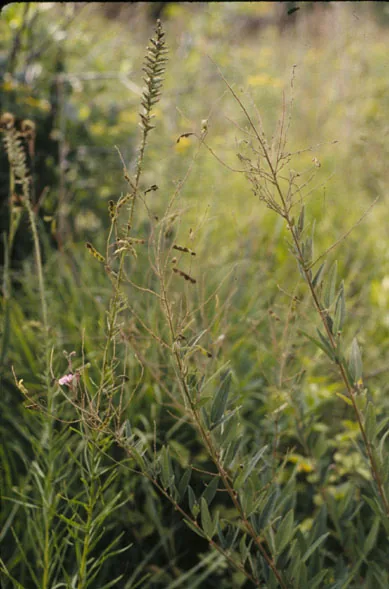
Tick trefoil (Desmodium paniculatum and relatives) is a native legume herb of woodland edges and openings: compound leaves, pink pea flowers, and seeds packaged with adhesive legumes that stick to socks like passive-aggressive souvenirs. Plants are often 2–4 feet, branching and soft-stemmed unless grazed. subtropical and tropical Americas: Common in Florida’s oak-pine understories and disturbed edges; Puerto Rico hosts other Desmodium species in similar edge habitats—ID locally before you name-drop paniculatum like a tourist. It fixes nitrogen quietly while feeding skipper larvae and other insects; socks are the price of walking through late-season patches. Part sun to light shade; full sun only where soil moisture holds through afternoon roast. Moderate moisture typical of woodland edges; tolerates short dry spells once rooted—deep sand needs mulch backup. Scarify seeds or pour near-boiling water, then sow in warm soil; legume seed coats are built for stubbornness. Divide young clumps in spring before flowering if you find a garden-worthy clone without guilt. For permaculture, timing is “let it flower for insects, then cut before seeds glue your laundry” if managing near paths. Incorporate slashed biomass as green manure in late season where you are not saving local seed banks.
Permaculture Functions
- Nitrogen Fixer: Desmodium paniculatum forms rhizobial nodules on Piedmont woodland edges -- chop-and-drop before velcro seeds attach to every sock passing the deer trail.
- Wildlife Attractor: Pink ladder flowers feed long-tongued bees -- while segmented seeds feed bobwhite and songbirds scratching leaf litter.
- Ground Cover: Arching legume stems stitch oak savanna gaps -- outcompetes invasive Lespedeza that would otherwise close canopy openings first.
Companion Planting
Also mentioned as companions:
- Goldenrod
Not yet profiled in PermiePortal
- St. Augustine grass — dense thatch and mower culture smother establishing Desmodium seedlings at woodland edges.
- English ivy — evergreen mat excludes light and pulls moisture from native herb-layer recruits.
Threats & Pressure
- Aphids
- Banded Cucumber Beetle
- Bean Aphid
- Bean Leaf Beetle
- Bean Weevil
- Corn Earworm
- Cowpea Curculio
- Fall Armyworm
- Kudzu Bug
- Locust Borer
- Locust Leaf Miner
- Lubber Grasshopper
- Pea Moth
- Pea Weevil
- Reniform Nematode
- Root Aphid
- Rootknot Nematodes
- Soybean Looper
- Spittlebugs
- Stink Bug
- Striped Cucumber Beetle
- Spotted Cucumber Beetle
- Brown Marmorated Stink Bug
- Harlequin Ladybird
- Velvetbean Caterpillar