About
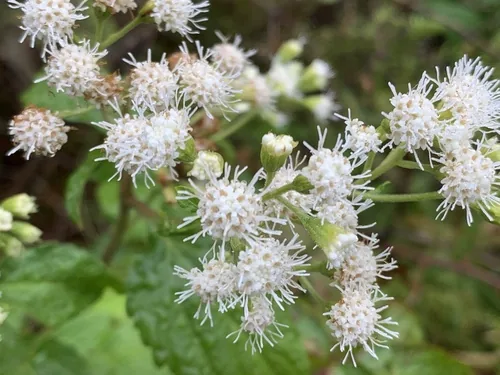
Boneset (Eupatorium perfoliatum) is a native North American perennial of wet meadows and stream banks, recognized by opposite leaves fused around the stem (perfoliate) and flat-topped clusters of white fuzzy flowers in late summer and fall. Plants typically grow 60–120 cm (2–4 feet) tall with a bushy, upright habit. Full sun to light shade. Rich, moist to wet soil; tolerates seasonal saturation. In subtropical and tropical Americas, grow in rain gardens, pond buffers, or heavily mulched beds with steady irrigation—dry sand will cause wilting and poor bloom. Airflow helps foliage during humid wet season. Seeds: Surface-sow in fall or stratify moist cold 4–6 weeks; germinates in warm, moist conditions. Division: Split fibrous clumps in early spring; replant at the same depth and water well. Gather flowering tops at full bloom on dry mornings for drying; traditional use focuses on aerial parts. Leave late flowers for migrating pollinators.
Permaculture Functions
- Medicinal: Eupatorium perfoliatum tops at full anthesis are the Appalachian diaphoretic bitter standard -- opposite leaves fused around the stem are the field ID key so you never dry bundles mixed with other white-flowered thoroughworts you did not walk the site with.
- Pollinator: Flat white corymbs of disc florets open August through October, fueling migrating monarchs, bumblebee queens, and syrphid flies when goldenrod and asters overlap -- each head is a landing pad shallow enough for fly tongues.
- Wildlife Attractor: Fluffy achenes ride wind into snow fences where tree sparrows feed -- stiff winter skeletons left at twelve-inch (30 cm) stubble catch drifting snow over the crown so ice does not shear buds during freeze-thaw weeks.
- Biomass: Soft four-foot (1.2 m) stems from wet soil compost in three weeks when chipped into rain-garden berms -- high water content means mix with straw or dry leaves so the pile does not go sour anaerobic.
Companion Planting
Threats & Pressure