About
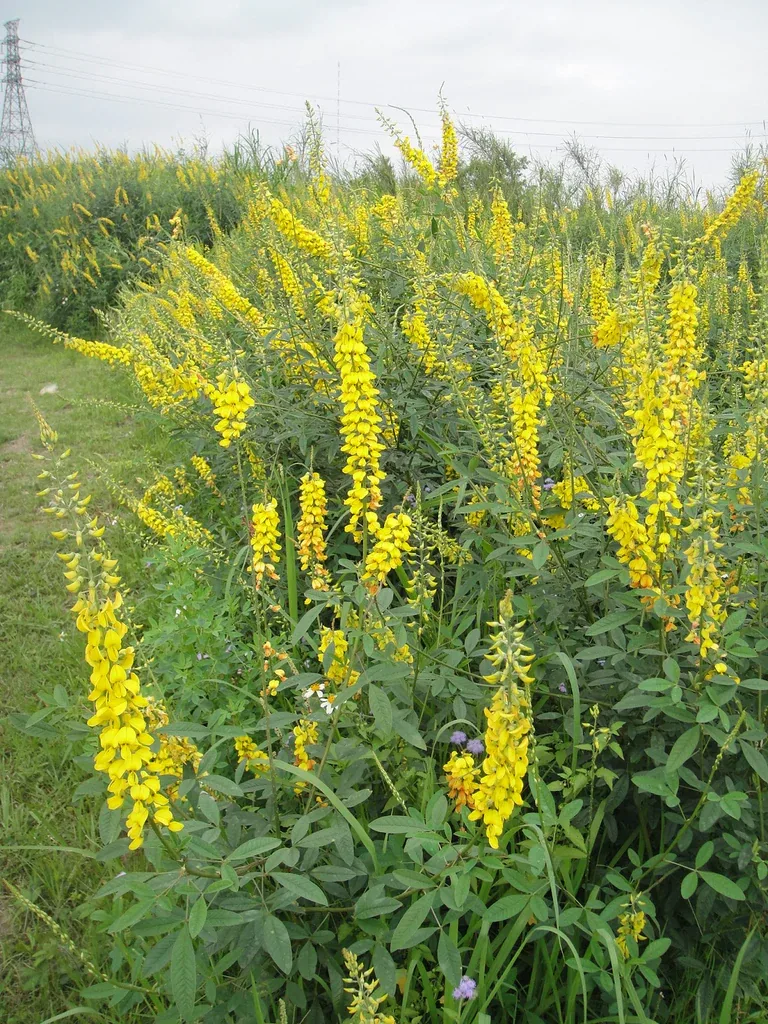
Rattlebox (*Crotalaria spectabilis*) is an annual herbaceous plant in the Fabaceae family, known for its vibrant yellow flowers and distinctive seed pods that rattle when shaken. It typically grows to a height of 1.2 to 1.5 meters (4 to 5 feet) with erect, ridged stems covered in short hairs. The leaves are simple, obovate, and alternately arranged, measuring 3.3 to 9.2 centimeters in length and 1 to 3.8 centimeters in width. Flowering occurs from August to November, producing bright yellow blooms that attract various pollinators. The plant thrives in full sun and prefers sandy, well-drained soils. Propagation is primarily through seeds, which can be sown directly into the soil after the last frost. Harvesting for green manure purposes is best done before the plant sets seed to maximize nutrient content. Seed Propagation: Sow seeds directly into the soil after the last frost. Scarification of seeds can improve germination rates. Sun: Prefers full sun exposure. Water: Requires moderate watering; drought-tolerant once established but performs best with regular moisture. For green manure, incorporate the plant into the soil before it sets seed to maximize nutrient content.
Permaculture Functions
- Nitrogen Fixer: Crotalaria spectabilis nodulates on warm-season roots, pumping plant-available nitrogen into biomass before winter kill -- seed is toxic to many livestock; never graze stands or bale hay with pods included.
- Ornamental: Erect stems carry showy yellow papilionaceous flowers and inflated rattling pods that read tropical in annual beds -- treat as short-lived spectacle, not a pet-friendly snack garden because pyrrolizidine alkaloids are real.
Companion Planting
No companion data yet.
Also mentioned as companions:
- Corn
- Cotton
- Vegetables
Not yet profiled in PermiePortal
- Livestock (due to toxicity)
Threats & Pressure
- Aphids
- Banded Cucumber Beetle
- Bean Aphid
- Bean Leaf Beetle
- Bean Weevil
- Corn Earworm
- Cowpea Curculio
- Fall Armyworm
- Kudzu Bug
- Locust Borer
- Locust Leaf Miner
- Lubber Grasshopper
- Pea Moth
- Pea Weevil
- Reniform Nematode
- Root Aphid
- Soybean Looper
- Spittlebugs
- Stink Bug
- Striped Cucumber Beetle
- Spotted Cucumber Beetle
- Brown Marmorated Stink Bug
- Harlequin Ladybird
- Velvetbean Caterpillar