About
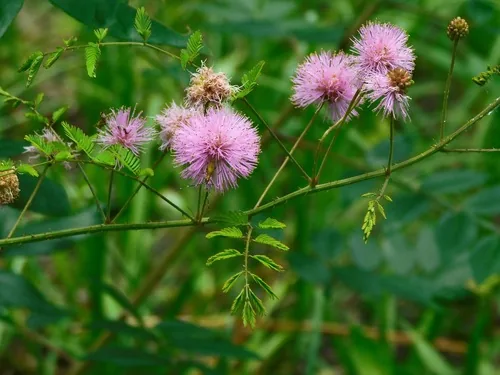
Sensitive briar (Mimosa nuttallii) is a prostrate to low-climbing legume of prairies, roadsides, and open sandy ground in central North America, bearing powder-puff pink flowers and leaves that fold on touch. Tiny recurved prickles snag socks honestly. It fixes nitrogen while living low, a useful component of meadow mixes and disturbed-site recovery where taller partridge peas would dominate visually. Full sun; shade reduces bloom and nodulation. Drought tolerant once established; benefits from occasional rain after establishment. Sandy to loamy well-drained soils; tolerates poor ground where turf gives up. Scarified seed direct-sown after soil warms. Division of crowns with care—taproot resents rough handling. Protect young plants from aggressive mulch smothering; crowns want light and air. Not a primary food crop; value is soil and pollinator service. Collect seed when pods brown and before full shatter if managing a seed increase plot. Mow or burn per local prairie protocol—always follow regulations and safety training.
Permaculture Functions
- Nitrogen Fixer: Mimosa nuttallii roots nodulate with rhizobia that stash nitrogen during prairie summers -- let runners weave between bunchgrass crowns instead of mowing them sterile.
- Pollinator: Powder-puff pink mimosoid heads offer pollen to small bees above prostrate vines -- that barely clear your boots.
- Wildlife Attractor: Sulphur larvae chew sensitive foliage where catclaw prickles discourage mammal browse long enough -- for pupation.
- Ground Cover: Touch-sensitive leaflets carpet sandy openings -- while recurved barbs snag boots before bare soil blows off berms.
Companion Planting
Threats & Pressure
- Aphids
- Banded Cucumber Beetle
- Bean Aphid
- Bean Leaf Beetle
- Bean Weevil
- Clover Weevils
- Corn Earworm
- Cowpea Curculio
- Fall Armyworm
- Kudzu Bug
- Leafhoppers
- Locust Borer
- Locust Leaf Miner
- Lubber Grasshopper
- Pea Moth
- Pea Weevil
- Reniform Nematode
- Root Aphid
- Soybean Looper
- Spittlebugs
- Stink Bug
- Striped Cucumber Beetle
- Spotted Cucumber Beetle
- Brown Marmorated Stink Bug
- Harlequin Ladybird
- Velvetbean Caterpillar