About
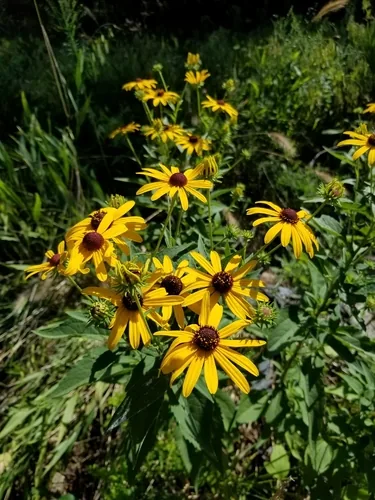
Sweet black-eyed Susan (Rudbeckia subtomentosa) is a perennial of central and eastern North American prairies and open woods, with fragrant leaves, yellow ray flowers, and a dark central cone on stems often 3–5 feet (0.9–1.5 m). It tolerates partial shade and average moisture better than many dry-land rudbeckias, making it useful at meadow edges and along paths where foot traffic demands resilience. Full sun to light partial shade; best flowering with good light. Average, well-drained soils suit it; tolerates clay if drainage is not stagnant. Mulch to keep roots cool; water during establishment and drought. Divide clumps in spring; sow seed with cold stratification or direct-sow in fall. Cut back in late winter if tidy gardens matter. Cut flowers when rays are fully open for bouquets. Leave seed heads for finches. Peak bloom tracks mid-to-late warm season.
Permaculture Functions
- Pollinator: Rudbeckia subtomentosa vanilla-scented disk flowers attract long-tongued bees through muggy July afternoons -- under edge shade.
- Wildlife Attractor: Cone seeds feed goldfinches -- while fuzzy stems shelter beneficial wasps if cleanup waits until crocus emergence.
- Ornamental: Soft gray-green foliage reads lush in dry shade borders -- where upright yellow daisies lift eye level without shrub weight.
- Border Plant: Three-foot wands trace path curves through meadow plantings -- without demanding hedge shears.
Companion Planting
- Powdery Mildew — improve airflow if crowns are overcrowded
- Wet shade — leggy growth with fewer flowers despite polite silence
Threats & Pressure