About
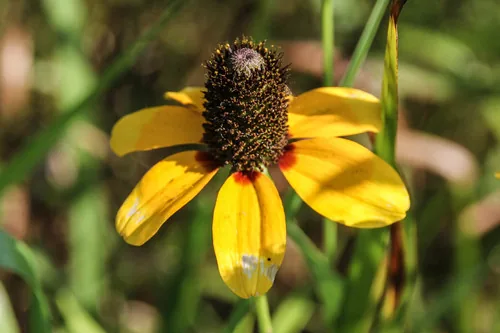
Clasping coneflower (Rudbeckia amplexicaulis) is an annual or short-lived perennial wildflower of moist prairies, ditches, and open wet ground in central and eastern North America, with stems to 2–3 feet (0.6–0.9 m) and yellow ray flowers above clasping, heart-shaped leaves that wrap the stem. It thrives where soils stay damp in the growing season and sun is abundant—classic rain-garden filler that still reads as native meadow, not bedding annual cosplay. Full sun for sturdy stems and heavy bloom; partial shade stretches and reduces flowers. Prefers moist to wet soils with good aeration between rainfall events; tolerates short dry spells once established but looks best with consistent moisture. Avoid planting in deep shade under dense canopy. Sow seed in fall outdoors for natural stratification or cold-stratify for spring sowing. Self-seeds freely in open moist soil—edit volunteers to prevent monoculture whimsy. Divide short-lived clumps in early spring if crowns enlarge. Cut flowers for bouquets at early open stages; leave plenty for pollinators. Collect seed when heads brown and dry for intentional resowing or sharing. Pull excess volunteers before they lobby the whole bed.
Permaculture Functions
- Pollinator: Yellow Rudbeckia disks and rays pump nectar and pollen to bees, butterflies, and syrphid flies in moist full-sun pockets -- where many prairie forbs fail.
- Ornamental: Heart-shaped clasping leaves and bright daisies give rain-garden plantings a native meadow look -- without annual bedding plant turnover.
- Wildlife Attractor: Mature seed heads feed goldfinches and sparrows -- if you leave stems standing past first frost.
- Erosion Control: Fibrous root mats lock newly graded swale bottoms and pond shelves during the first wet seasons -- after construction.
- Border Plant: Knee-high habit traces the wet edge between stone paths and bioswale cells -- where turf would drown or erode.
Companion Planting
- Droughty berms — without irrigation, plants dwindle to ghost stems by mid-summer
Threats & Pressure