About
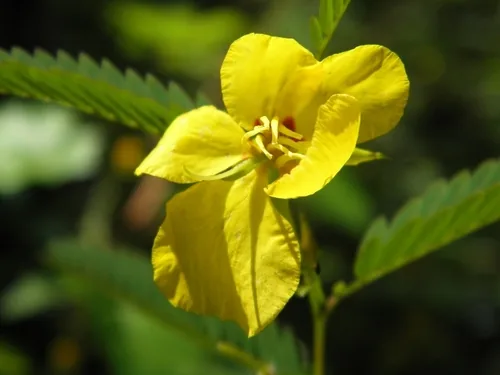
Partridge pea is a native annual legume with feathery leaves, yellow flowers freckled with red, and pods that rattle like tiny maracas. It colonizes disturbed sand and roadsides across the Southeast—including subtropical and tropical Americas—fixing nitrogen while feeding bees and caterpillars. Not a lawn monoculture plant; think pollinator strips, food forest edges, and “stop mowing this sandhill” experiments. Full sun; blooms thin out fast in shade. Sandy, well-drained soils preferred; drought-tolerant once seedlings establish—classic Florida sandhill attitude. Seeds: scarify or winter-sow; self-sows freely where happy—manage if you do not want a yellow takeover. Direct sow after last frost when soil warms. Ecological harvest: seed for next year’s strips; not a primary human food crop in most gardens.
Permaculture Functions
- Nitrogen Fixer: Chamaecrista fasciculata annual legume nodulates on sandhill and roadside soils, pumping plant-available nitrogen into biomass that winter frost releases -- overseed after spring burns or mechanical scarification for best nodulation.
- Wildlife Attractor: Yellow flowers freckled red offer pollen to long-tongued bees; foliage hosts cloudless sulphur and gray hairstreak larvae -- leave pods to rattle seed for bobwhite and rodents if restoration goals beat tidiness.
- Ground Cover: Knee-high branching covers bare mineral soil the first warm season after disturbance while slower prairie perennials establish below -- pulls back naturally once canopy closes unless fire or mowing reopens light.
Companion Planting
Also mentioned as companions:
- Blazing star
Not yet profiled in PermiePortal
- Heavy irrigated turf where it will be out-competed and bored
- Dense shade under evergreen monocultures
- Native grasses
Threats & Pressure
- Aphids
- Banded Cucumber Beetle
- Bean Aphid
- Bean Leaf Beetle
- Bean Weevil
- Corn Earworm
- Cowpea Curculio
- Fall Armyworm
- Japanese Beetles
- Kudzu Bug
- Locust Borer
- Locust Leaf Miner
- Lubber Grasshopper
- Pea Moth
- Pea Weevil
- Reniform Nematode
- Root Aphid
- Soybean Looper
- Spittlebugs
- Stink Bug
- Striped Cucumber Beetle
- Spotted Cucumber Beetle
- Brown Marmorated Stink Bug
- Harlequin Ladybird
- Velvetbean Caterpillar