About
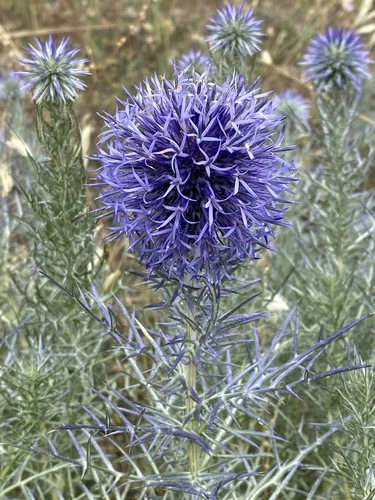
Globe thistle (*Echinops ritro*) is a spiny-leaved perennial from Eurasia, grown for steel-blue spherical flower heads on branching stems 3–4 feet tall. Deep roots and silvery foliage suit dry borders. In subtropical and tropical Americas it is best in winter-spring display with sharp drainage—summer humidity and heavy clay often trigger foliar decline, so treat it as a seasonal star in raised beds or Mediterranean-style plantings. Full sun and excellent drainage. Water deeply but infrequently; avoid wet foliage overnight in humid subtropical rainy season. Root cuttings: Take thick root pieces in late winter, bury horizontally in sandy mix, and keep warm until shoots appear. Seeds: Sow in spring; seedlings may take a couple of years to reach flowering size. Cut flowers for drying when color is fully blue and bracts are tight. Leave late heads for goldfinches and other seed eaters if you are not worried about self-sowing.
Permaculture Functions
- Ornamental: Echinops ritro steel-blue globes on branched three-to-four-foot stems spike Mediterranean borders without thirsty annual color dependence on the same drip zone you already mulched with gravel -- for sharp drainage honesty.
- Pollinator: Honeybees grid each capitulum surface as soon as blue bracts open because accessible nectaries stay shallow -- for short tongues during July peak heat on raised limestone berms in zones 3 through 8 plantings you water deeply not daily.
- Wildlife Attractor: Goldfinches cling vertical stems into winter stripping achenes if heads stay uncut on xeric Colorado foothill rows matching hardiness -- where snow load snaps weaker stems unless you leave structural skeletons for bird perches anyway.
- Border Plant: Spiny gray foliage discourages dog shortcuts through perennial strip beds better than polite signs HOA ignores on corner lots -- where foot traffic would otherwise compact mulch into mud each school-bus morning you already timed.
- Dynamic Accumulator: Deep taproot mines chalk subsoil pulling calcium into stiff stalks you chop-and-drop beside lavender rows on limestone berms after frost kills tops -- without importing oyster shell bags every spring to buffer same pH drift.
Threats & Pressure